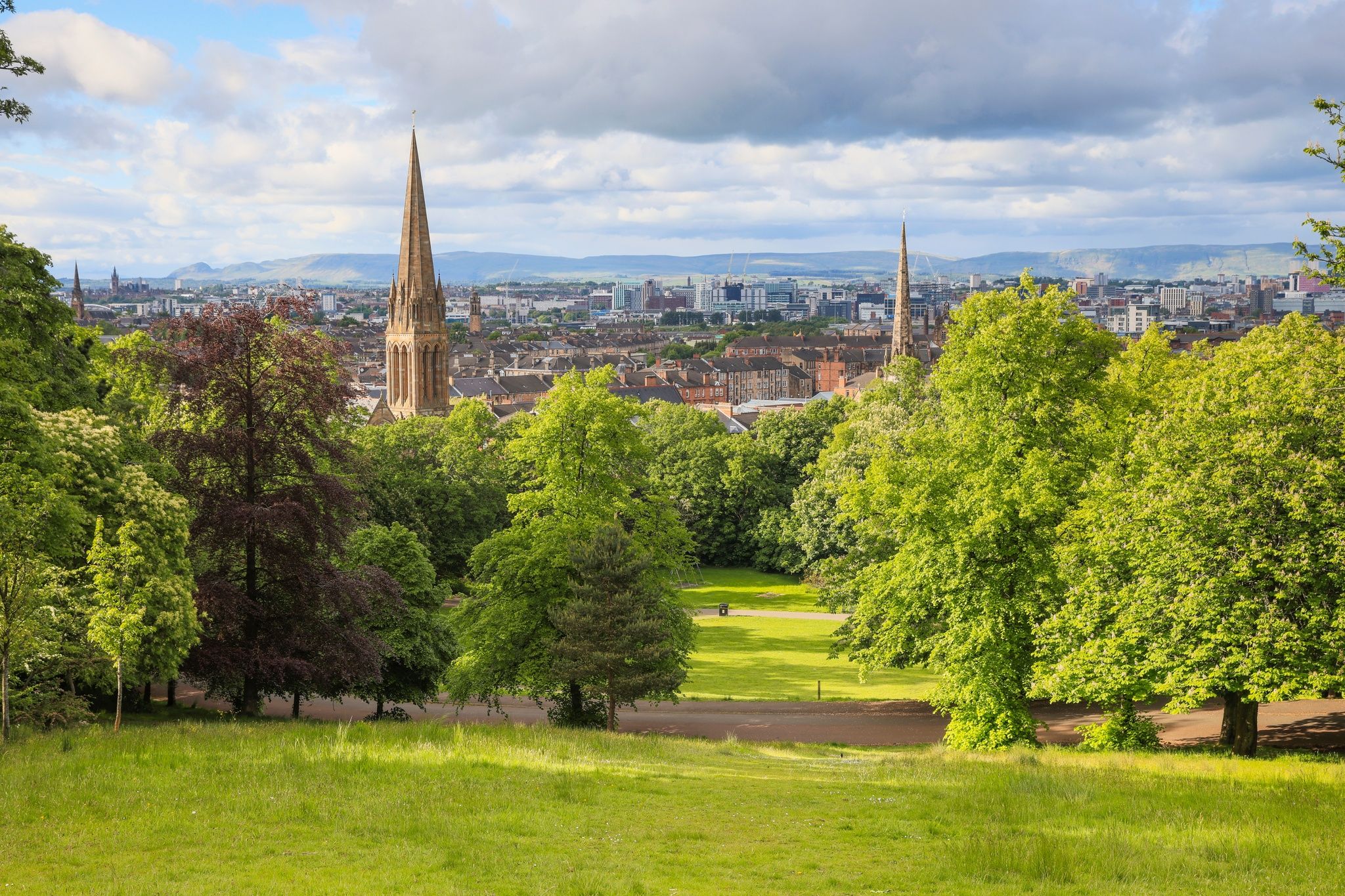
Dumfries and Galloway
Beauty and Burns on the Border
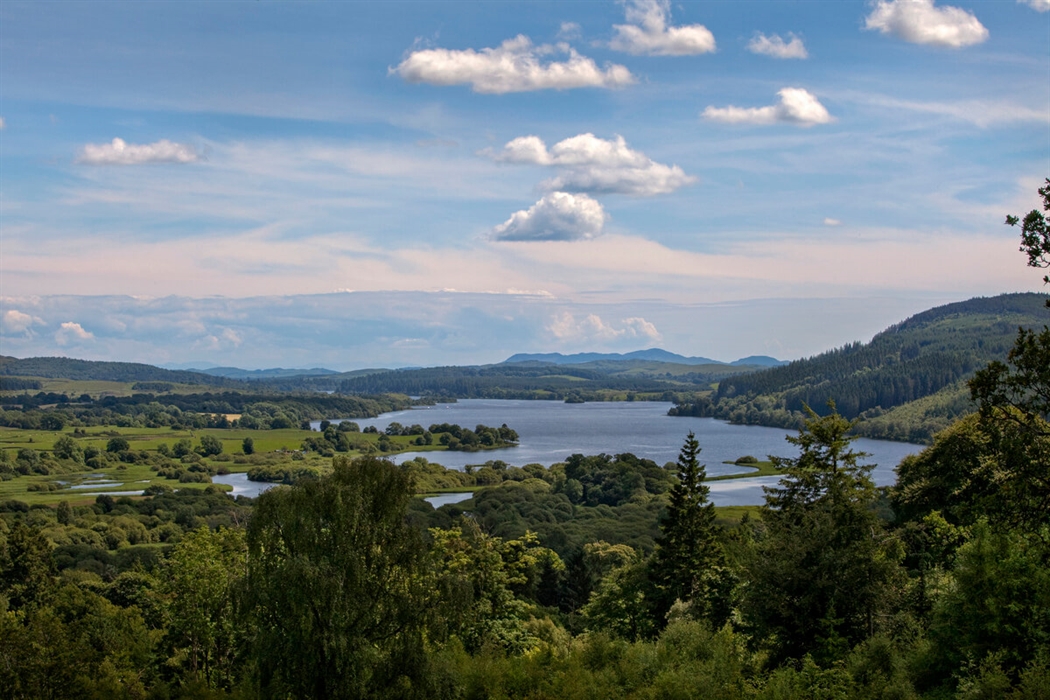
The landscape of Dumfries and Galloway is an alluring mix of moorland, glen and forest, ideal country for the Border reivers who lived a lawless life in the no-man's land that separated Scotland and England. A more highly regarded individual, the poet extraordinaire Robert Burns, also called Dumfries & Galloway home. As did John Paul Jones who would later find fame as the founder of the United States Navy. So much history in such a small, perfectly packaged corner of Scotland.
For the family historian, a visit to the Museum of Costume at Shambellie House, part of the National Museums of Costume, will provide a fascinating look at fashion and social etiquette from the 1850s to the 1950s. And of course a visit to Gretna Green is essential. Here, many runaway couples from England came to get married and it is still a popular wedding venue today.
Find out more about Dumfries and Galloway
- The county »
- Clan and Family Heartlands »
- Parishes »
- Local Studies Libraries »
- Local Archives Centres »
- Museum and Heritage Centres »
- Family History Society »
- Burials Information »
The county ~ Dumfriesshire
Dumfries-shire shares a border with Cumbria, its English neighbour, and lies to the North of the Solway Firth. Dumfries was the largest burgh and its county town. It was, for the most part, an agricultural county with an emphasis on dairy farming. Other burghs are Annan, Langholm, Moffat and Lockerbie. Robert Burns spent his latter years in the County, first as a farmer at Ellisland and then as a Dumfries based exciseman. Gretna Green became famous for its "irregular" marriages of eloping couples. The area is now part of Dumfries and Galloway Region.
Clan and Family Heartlands
You can get a feel for the lives your ancestors lived by visiting the area they came from. These are areas where, for centuries, families lived together in a tightly-knit community. In the Highlands they are linked to clan heartlands, whereas, in the rest of Scotland the names are often those of the local landed families. Although it is unlikely that family historians can link their ancestry to clan chiefs or family dynasties, it can still be a moving experience to tour the clan and family heartlands.
Here is a selection of the most common names in this area.
Parishes
The Parish Church can unlock many secrets for ancestral researchers. Not only was it the place where children were baptised, proclamations of marriage announced and the dead buried, it was also the centre of most social activity within the Parish. There is, however, no such thing as a definitive list of parishes. Over the decades they have merged, divided, been renamed and had changes made to their spelling. The following list is based largely on the situation at the time of publication of the New Statistical Account (1834-1845).
Annan,
Applegarth and Sibbaldbie,
Caerlaverock (Carlaverock),
Canonbie,
Closeburn,
Cummertrees,
Dalton,
Dornock (Dornok),
Dryfesdale,
Dumfries,
Dunscore,
Durideer (Durrisdeer),
Eskdalemuir,
Ewes,
Glencairn,
Graitney (Gretna),
Hoddam,
Holywood,
Hutton and Corrie,
Johnstone,
Keir,
Kirkconnell,
Kirkmahoe,
Kirkmichael,
Kirkpatrick-Fleming,
Kirkpatrick-Juxta,
Langholm,
Lochmaben,
Middlebie,
Moffat,
Morton,
Mouswald (Mousewald),
Penpont,
Ruthwell,
Sanquhar,
St Mungo,
Tinwald and Trailflat (Tinwald),
Torthorwald,
Tundergarth,
Tynron,
Wamphray
* subsequently divided into seperate parishes, ( ) denotes alternative name or spelling
Detailed information on life and work within each of these parishes can be found in the Old (1791-99) and the New (1834-45) Statistical Account of Scotland. These are freely accessible on http://edina.ed.ac.uk/statacc. Part of their charm is the individual views of the minister, which can include some fascinating accounts of a parish's history, topography, employment, landowners, communications, agriculture and even the morality of the parishioners
Local Studies Libraries
Almost every municipal authority in Scotland has a collection of local history publications, maps and archives. Although most of these libraries are prepared to undertake a limited amount of searching on your behalf, it is far more fulfilling to visit them yourself. You could lose yourself for hours, pouring over old newspapers and photographs.
The following is a list of the libraries in your chosen area:
Ewart Library
Catherine Street
Dumfries
DG1 1JB
Tel: +44 1387 253820
Fax: +44 1387 260294
E-mail:
libs&i@dumgal.gov.uk
Open: Mon-Wed & Fri, 10:00 - 19:30, Thu & Sat 10:00 - 17:00.
Resources include the Wigtown Free Press (1843-1925), most of which has been indexed. Over 20,000 local photographs.
Stranraer Museum
Old Town Hall
55 George Street
Stranraer
DG9 7JP
Tel: +44 1776 705088
Fax: +44 1776 707835
E-mail:
johnpic@dumgal.gov.uk
www.dumfriesmuseum.demon.co.uk/stranmuse.html
Open: Mon-Fri 10:00 - 17:00, Sat 10:00 - 13:00 & 14:00 - 17:00, by prior appointment.
Includes newspaper and photographic collections as well as publications relating to the County.
Local Archives Centres
Almost every municipal authority in Scotland has a collection of local history publications, maps and archives. Although most of these libraries are prepared to undertake a limited amount of searching on your behalf, it is far more fulfilling to visit them yourself. You could lose yourself for hours, pouring over old newspapers and photographs.
The following is a list of the archive offices in your chosen area:
Dumfries and Galloway Archives
Archive Centre
33 Burns Street
Dumfries
DG1 2PS
Tel: +44 1387 269254
Fax: +44 1387 264126
E-mail:
libs8i@dumgal.gov.uk
www.dumgal.gov.uk/dumgal/Services.aspx?id=6
Open: Tue, Wed & Fri 11:00 - 13:00 & 14:00 - 17:00 & Thu 18:00 - 21:00 (appointment recommended).
Additional material includes Kirk Session, Presbytery and Non-Conformist Church records, Poor and Parochial Board records, Sasine Registers, court records and police records.
Museum and Heritage Centres
Scotland is a country with a remarkable history. So it should come as no surprise that Scotland is home to a remarkable collection of museums and heritage centres. These range from the major, internationally renowned collections in Edinburgh's Royal Museum of Scotland to hundreds of small centres that specialise in the history of local communities. The following museums are all in your chosen area. A visit to any one of them may well shed new light on the lives led by your ancestors.
Museum of Lead Mining
Wanlockhead
By Biggar
ML12 6UT
Tel: +44 1659 74387
Fax: +44 1659 74481
E-mail: info@goldpan.co.uk
www.leadminingmuseum.co.uk
Open: April-October, daily 1100-1630
Traces the history of lead mining in Scotland's highest village. Includes tours of a mine, miners' cottages and library. Some archival material relating to the mine and the village is also available.
Sanquhar Tolbooth Museum
High Street
Sanquhar
DG4 6BN
Tel: +44 1659 50186
Open: April-September, Tue-Sat, 10:00 - 13:00 & 14:00 - 17:00
&
Sun 14:00 - 17:00.
Tells the story of upper Nithsdale with displays relating to the mining and knitting industries.
Moffat Museum
The Old Bakehouse
The Neuk
Church Gate
Moffat
DG10 9EG
Tel: +44 1683 220868
Open: Easter & May-September, Mon-Tue & Thur-Sat, 1030-1300, 1430-1700; Sun 1430-1700.
Tells the story of Moffat and its people. It also includes information on local families.
Family History Society
Local societies are run by volunteers who meet together periodically. Most maintain an index of members' interests - and this could well lead to the discovery of a long lost cousin or two. If there are any such societies in your chosen area, they will be listed below.
Dumfries and Galloway Family History Society
Family History Research Centre
9 Glasgow Street
Dumfries
DG2 9AF
Tel: +44 1387 248093
E-mail:
secretary@dgfhs.org.uk
www.dgfhs.org.uk
Open: Tue-Fri, 10:00 - 16:00 & Sat 10:00 - 13:00.
It may seem a little odd, but a visit to the burial ground of an ancestor can make you feel more closely connected to them. However, tracking down the specific plot, or lair as they were referred to in Scotland, depends on the period of time when the deaths occurred.
Up to the mid-19th century it was the normal practice for people to be interred in the Parish Kirk burial ground - although this was only rarely marked with anything as grand as a headstone. The Scottish Association of Family History Societies (SAFHS) is currently co-ordinating a major project to develop a National Burial Index, relating to pre-1855 records. This will eventually be available on CD ROM. Although this will help to confirm that burials took place in parish burial grounds, it will not, unfortunately, indicate the location of the lair.
If your ancestor was wealthy enough, their grave may have been marked by an inscribed headstone. Over the years, family history societies and other volunteer groups have painstakingly transcribed and indexed such inscriptions - and these are nearly always held in the relevant local history libraries or family history research centres.
By the mid-19th Century, many parish burial grounds had become seriously overcrowded, especially those in urban areas, and this led to the creation of both private and municipal cemeteries. If you know the place and date of death, you should be able to discover the location of a lair, although not all cemeteries and records have survived.
The concept of cremation started to gain popularity in the late 1940s and has increased ever since. Ashes may be taken away by the family, scattered in the garden of remembrance or buried either in the crematorium or in a family plot.
Nithsdale
Combined Services
High Cemetery Lodge
Craigs Road
Dumfries
DG1 4EX
Tel: +44 1387 266 373
Fax: +44 1387 254 918
Annan & Eskdale
Combined Services
Dumfries and Galloway Council
Dryfe Road
Lockerbie
DG11 2AP
Tel: +44 1576 205 000
Enquiries are normally dealt with free of charge provided reasonably specific details are known of the death/burial. Personal visits by appointment.
- The county »
- Clan and Family Heartlands »
- Parishes »
- Local Studies Libraries »
- Local Archives Centres »
- Museum and Heritage Centres »
- Family History Society »
- Burials Information »
The county ~ Kirkcudbrightshire
Kirkcudbrightshire was formerly known as the Stewartry. It was bordered by Wigtownshire, Ayrshire and Dumfries-shire, and Kirkcudbright was its county town. Other Burghs included Dalbeattie and Castle Douglas. The major industry was agriculture particularly dairy farming. It is now part of the Dumfries and Galloway Region.
Clan and Family Heartlands
You can get a feel for the lives your ancestors lived by visiting the area they came from. These are areas where, for centuries, families lived together in a tightly-knit community. In the Highlands they are linked to clan heartlands, whereas, in the rest of Scotland the names are often those of the local landed families. Although it is unlikely that family historians can link their ancestry to clan chiefs or family dynasties, it can still be a moving experience to tour the clan and family heartlands.
Here is a selection of the most common names in this area.
Douglas
Little
Maxwell
Stewart
Parishes
The Parish Church can unlock many secrets for ancestral researchers. Not only was it the place where children were baptised, proclamations of marriage announced and the dead buried, it was also the centre of most social activity within the Parish. There is, however, no such thing as a definitive list of parishes. Over the decades they have merged, divided, been renamed and had changes made to their spelling. The following list is based largely on the situation at the time of publication of the New Statistical Account (1834-1845).
Anworth,
Balmaclellan,
Balmaghie,
Borgue,
Buittle,
Carsphairn,
Colvend and Southwick (Colvend),
Crossmichael,
Dalry,
Girthon,
Kells,
Kelton,
Kirkbean,
Kirkcudbright,
Kirkgunzeon,
Kirkmabreck,
Kirkpatrick-Durham,
Kirkpatrick-Irongray (Irongray),
Lochrutton,
Minnigaff,
New Abbey,
Parton,
Rerrick,
Terregles,
Tongland Troqueer,
Twynholm,
Urr
* subsequently divided into seperate parishes, ( ) denotes alternative name or spelling
Detailed information on life and work within each of these parishes can be found in the Old (1791-99) and the New (1834-45) Statistical Account of Scotland. These are freely accessible on http://edina.ed.ac.uk/statacc. Part of their charm is the individual views of the minister, which can include some fascinating accounts of a parish's history, topography, employment, landowners, communications, agriculture and even the morality of the parishioners
Local Studies Libraries
Almost every municipal authority in Scotland has a collection of local history publications, maps and archives. Although most of these libraries are prepared to undertake a limited amount of searching on your behalf, it is far more fulfilling to visit them yourself. You could lose yourself for hours, pouring over old newspapers and photographs.
The following is a list of the libraries in your chosen area:
Ewart Library
Catherine Street
Dumfries
DG1 1JB
Tel: +44 1387 253820
Fax: +44 1387 260294
E-mail:
libs&i@dumgal.gov.uk
Open: Mon-Wed & Fri, 10:00 - 19:30, Thu & Sat 10:00 - 17:00.
Resources include the Wigtown Free Press (1843-1925), most of which has been indexed. Over 20,000 local photographs.
Stranraer Museum
Old Town Hall
55 George Street
Stranraer
DG9 7JP
Tel: +44 1776 705088
Fax: +44 1776 707835
E-mail:
johnpic@dumgal.gov.uk
www.dumfriesmuseum.demon.co.uk/stranmuse.html
Open: Mon-Fri 10:00 - 17:00, Sat 10:00 - 13:00 & 14:00 - 17:00, by prior appointment.
Includes newspaper and photographic collections as well as publications relating to the County.
Local Archives Centres
Almost every municipal authority in Scotland has a collection of local history publications, maps and archives. Although most of these libraries are prepared to undertake a limited amount of searching on your behalf, it is far more fulfilling to visit them yourself. You could lose yourself for hours, pouring over old newspapers and photographs.
The following is a list of the archive offices in your chosen area:
Dumfries and Galloway Archives
33 Burns Street
Dumfries
DG1 2PS
Tel: +44 1387 269254
Fax: +44 1387 264126
E-mail:
libs&I@dumgal.gov.uk
www.dumgal.gov.uk/dumgal/Services.aspx?id=6
Open: Tue, Wed & Fri, 09:00 - 13:00 & 14:00 - 17:00, Thu 18:00 -
21:00.
Booking is advisable
Most archived material relating to Kirkcudbrightshire is located in the Stewartry Museum. (see below)
The Stewartry Museum
St Mary Street
Kirkcudbright
DG6 4AQ
Tel/Fax: +44 1557 331643
E-mail:
davidd@dumgal.gov.uk
www.dumfriesmuseum.demon.co.uk/stewmuse.html
Open: Mon-Fri, 09:00 - 13:00 & 14:00 - 17:00.
Holds records of the former burghs of the county.
Museum and Heritage Centres
Scotland is a country with a remarkable history. So it should come as no surprise that Scotland is home to a remarkable collection of museums and heritage centres. These range from the major, internationally renowned collections in Edinburgh's Royal Museum of Scotland to hundreds of small centres that specialise in the history of local communities. The following museums are all in your chosen area. A visit to any one of them may well shed new light on the lives led by your ancestors.
The Stewartry Museum
St Mary Street
Kirkcudbright
DG6 4AQ
Tel/Fax: +44 1557 331643
E-mail:
davidd@dumgal.gov.uk
www.dumfriesmuseum.demon.co.uk/stewmuse.html
Open: Mon-Fri, 09:00 - 13:00 & 14:00 - 17:00.
Exhibits include material relating to the social history of the Stewartry of Kirkcudbright.
Family History Society
Local societies are run by volunteers who meet together periodically. Most maintain an index of members' interests - and this could well lead to the discovery of a long lost cousin or two. If there are any such societies in your chosen area, they will be listed below.
Dumfries and Galloway Family History Society
Family History Research Centre
9 Glasgow Street
Dumfries
DG2 9AF
Tel: +44 1387 248093
E-mail:
secretary@dgfhs.org.uk
www.dgfhs.org.uk
Open: Tue-Fri, 10:00 - 16:00 & Sat 10:00 - 13:00.
It may seem a little odd, but a visit to the burial ground of an ancestor can make you feel more closely connected to them. However, tracking down the specific plot, or lair as they were referred to in Scotland, depends on the period of time when the deaths occurred.
Up to the mid-19th century it was the normal practice for people to be interred in the Parish Kirk burial ground - although this was only rarely marked with anything as grand as a headstone. The Scottish Association of Family History Societies (SAFHS) is currently co-ordinating a major project to develop a National Burial Index, relating to pre-1855 records. This will eventually be available on CD ROM. Although this will help to confirm that burials took place in parish burial grounds, it will not, unfortunately, indicate the location of the lair.
If your ancestor was wealthy enough, their grave may have been marked by an inscribed headstone. Over the years, family history societies and other volunteer groups have painstakingly transcribed and indexed such inscriptions - and these are nearly always held in the relevant local history libraries or family history research centres.
By the mid-19th Century, many parish burial grounds had become seriously overcrowded, especially those in urban areas, and this led to the creation of both private and municipal cemeteries. If you know the place and date of death, you should be able to discover the location of a lair, although not all cemeteries and records have survived.
The concept of cremation started to gain popularity in the late 1940s and has increased ever since. Ashes may be taken away by the family, scattered in the garden of remembrance or buried either in the crematorium or in a family plot.
Operations Manager
Environment and Infrastructure
Dumfries and Galloway Council
Daar Road
Kirkcubright
DG6 4JG
Tel: +44 1557 330 291
Enquiries are normally dealt with free of charge provided reasonably specific details are known of the death/burial. Personal visits by appointment.
- The county »
- Clan and Family Heartlands »
- Parishes »
- Local Studies Libraries »
- Local Archives Centres »
- Museum and Heritage Centres »
- Family History Society »
- Burials Information »
The county ~ Wigtownshire
Wigtownshire occupied the extreme south west of Scotland. The county town was Wigtown, other burghs being Newton Stewart, Whithorn (reportedly where St Ninian landed in Scotland on his pilgrimage) and Stranraer. Agriculture, especially dairy farming, was almost the only industry of the County. It is now part of Dumfries and Galloway Region.
Clan and Family Heartlands
You can get a feel for the lives your ancestors lived by visiting the area they came from. These are areas where, for centuries, families lived together in a tightly-knit community. In the Highlands they are linked to clan heartlands, whereas, in the rest of Scotland the names are often those of the local landed families. Although it is unlikely that family historians can link their ancestry to clan chiefs or family dynasties, it can still be a moving experience to tour the clan and family heartlands.
Here is a selection of the most common names in this area.
Douglas
Hannay
Kennedy
Parishes
The Parish Church can unlock many secrets for ancestral researchers. Not only was it the place where children were baptised, proclamations of marriage announced and the dead buried, it was also the centre of most social activity within the Parish. There is, however, no such thing as a definitive list of parishes. Over the decades they have merged, divided, been renamed and had changes made to their spelling. The following list is based largely on the situation at the time of publication of the New Statistical Account (1834-1845).
Glasserton,
Inch,
Kirkholm,
Kirkinner,
Kirkmaiden,
Kirkowan (Kirkcowan),
Leswalt,
Luce-New (New Luce),
Luce-Old (Old Luce),
Mochrum,
Penninghame,
Portpatrick,
Sorbie,
Stonykirk (Stoneykirk),
Stranraer,
Whithorn,
Wigtown
* subsequently divided into seperate parishes, ( ) denotes alternative name or spelling
Detailed information on life and work within each of these parishes can be found in the Old (1791-99) and the New (1834-45) Statistical Account of Scotland. These are freely accessible on http://edina.ed.ac.uk/statacc. Part of their charm is the individual views of the minister, which can include some fascinating accounts of a parish's history, topography, employment, landowners, communications, agriculture and even the morality of the parishioners
Local Studies Libraries
Almost every municipal authority in Scotland has a collection of local history publications, maps and archives. Although most of these libraries are prepared to undertake a limited amount of searching on your behalf, it is far more fulfilling to visit them yourself. You could lose yourself for hours, pouring over old newspapers and photographs.
The following is a list of the libraries in your chosen area:
Ewart Library
Catherine Street
Dumfries
DG1 1JB
Tel: +44 1387 253820
Fax: +44 1387 260294
E-mail:
libs&i@dumgal.gov.uk
Open: Mon-Wed & Fri, 10:00 - 19:30, Thu & Sat 10:00 - 17:00.
Resources include the Wigtown Free Press (1843-1925), most of which has been indexed. Over 20,000 local photographs.
Stranraer Museum
Old Town Hall
55 George Street
Stranraer
DG9 7JP
Tel: +44 1776 705088
Fax: +44 1776 707835
E-mail:
johnpic@dumgal.gov.uk
www.dumfriesmuseum.demon.co.uk/stranmuse.html
Open: Mon-Fri 10:00 - 17:00, Sat 10:00 - 13:00 & 14:00 - 17:00, by prior appointment.
Includes newspaper and photographic collections as well as publications relating to the County.
Local Archives Centres
Almost every municipal authority in Scotland has a collection of local history publications, maps and archives. Although most of these libraries are prepared to undertake a limited amount of searching on your behalf, it is far more fulfilling to visit them yourself. You could lose yourself for hours, pouring over old newspapers and photographs.
The following is a list of the archive offices in your chosen area:
Dumfries and Galloway Archives
Archive Centre
33 Burns Street
Dumfries
DG1 2PS
Tel: +44 1387 269254
Fax: +44 1387 264126
E-mail:
libsai@dumgal.gov.uk
www.dumgal.gov.uk/dumgal/Services.aspx?id=6
Open: Tue, Wed & Fri, 09:00 - 13:00 & 14:00 - 17:00 & Thu 18:00
- 21:00,
booking is advisable.
Additional material includes Kirk Session, Presbytery and Non-Conformist Church records, Poor and Parochial Board records, Sasine Registers and Court records.
Stranraer Museum
Old Town Hall
55 George Street
Stranraer
DG9 7JP
Tel: +44 1776 705088
Fax: +44 1776 707835
E-mail:
johnpic@dumgal.gov.uk
www.dumfriesmuseum.demon.co.uk/stranmuse.html
Open: Mon-Fri, 10:00 - 17:00, Sat 10:00 - 13:00 & 14:00 - 17:00.
Includes records of the former burghs of Wigtownshire.
Museum and Heritage Centres
Scotland is a country with a remarkable history. So it should come as no surprise that Scotland is home to a remarkable collection of museums and heritage centres. These range from the major, internationally renowned collections in Edinburgh's Royal Museum of Scotland to hundreds of small centres that specialise in the history of local communities. The following museums are all in your chosen area. A visit to any one of them may well shed new light on the lives led by your ancestors.
Stranraer Museum
Old Town Hall
55 George Street
Stranraer
DG9 7JP
Tel: +44 1776 705088
Fax: +44 1776 707835
E-mail:
johnpic@dumgal.gov.uk
www.dumfriesmuseum.demon.co.uk/stranmuse.html
Open: Mon-Fri, 10:00 - 17:00, Sat 10:00 - 13:00 & 14:00 - 17:00.
Displays on the history and archaeology of Wigtownshire.
Family History Society
Local societies are run by volunteers who meet together periodically. Most maintain an index of members' interests - and this could well lead to the discovery of a long lost cousin or two. If there are any such societies in your chosen area, they will be listed below.
Dumfries and Galloway Family History Society
Family History Research Centre
9 Glasgow Street
Dumfries
DG2 9AF
Tel: +44 1387 248093
E-mail:
secretary@dgfhs.org.uk
www.dgfhs.org.uk
Open: Tue-Fri, 10:00 - 16:00 & Sat 10:00 - 13:00.
It may seem a little odd, but a visit to the burial ground of an ancestor can make you feel more closely connected to them. However, tracking down the specific plot, or lair as they were referred to in Scotland, depends on the period of time when the deaths occurred.
Up to the mid-19th century it was the normal practice for people to be interred in the Parish Kirk burial ground - although this was only rarely marked with anything as grand as a headstone. The Scottish Association of Family History Societies (SAFHS) is currently co-ordinating a major project to develop a National Burial Index, relating to pre-1855 records. This will eventually be available on CD ROM. Although this will help to confirm that burials took place in parish burial grounds, it will not, unfortunately, indicate the location of the lair.
If your ancestor was wealthy enough, their grave may have been marked by an inscribed headstone. Over the years, family history societies and other volunteer groups have painstakingly transcribed and indexed such inscriptions - and these are nearly always held in the relevant local history libraries or family history research centres.
By the mid-19th Century, many parish burial grounds had become seriously overcrowded, especially those in urban areas, and this led to the creation of both private and municipal cemeteries. If you know the place and date of death, you should be able to discover the location of a lair, although not all cemeteries and records have survived.
The concept of cremation started to gain popularity in the late 1940s and has increased ever since. Ashes may be taken away by the family, scattered in the garden of remembrance or buried either in the crematorium or in a family plot.
Operations Manager
Combined Services
Dumfries and Galloway Council
Woodlea Road
Off Commerce Road
Stranraer
DG9 7DE
Tel: +44 1776 706030
Fax: +44 1776 707044
Enquiries are normally dealt with free of charge provided reasonably specific details are known of the death/burial. Personal visits by appointment.
Print this page - all information will be printed
Page top