Orkney
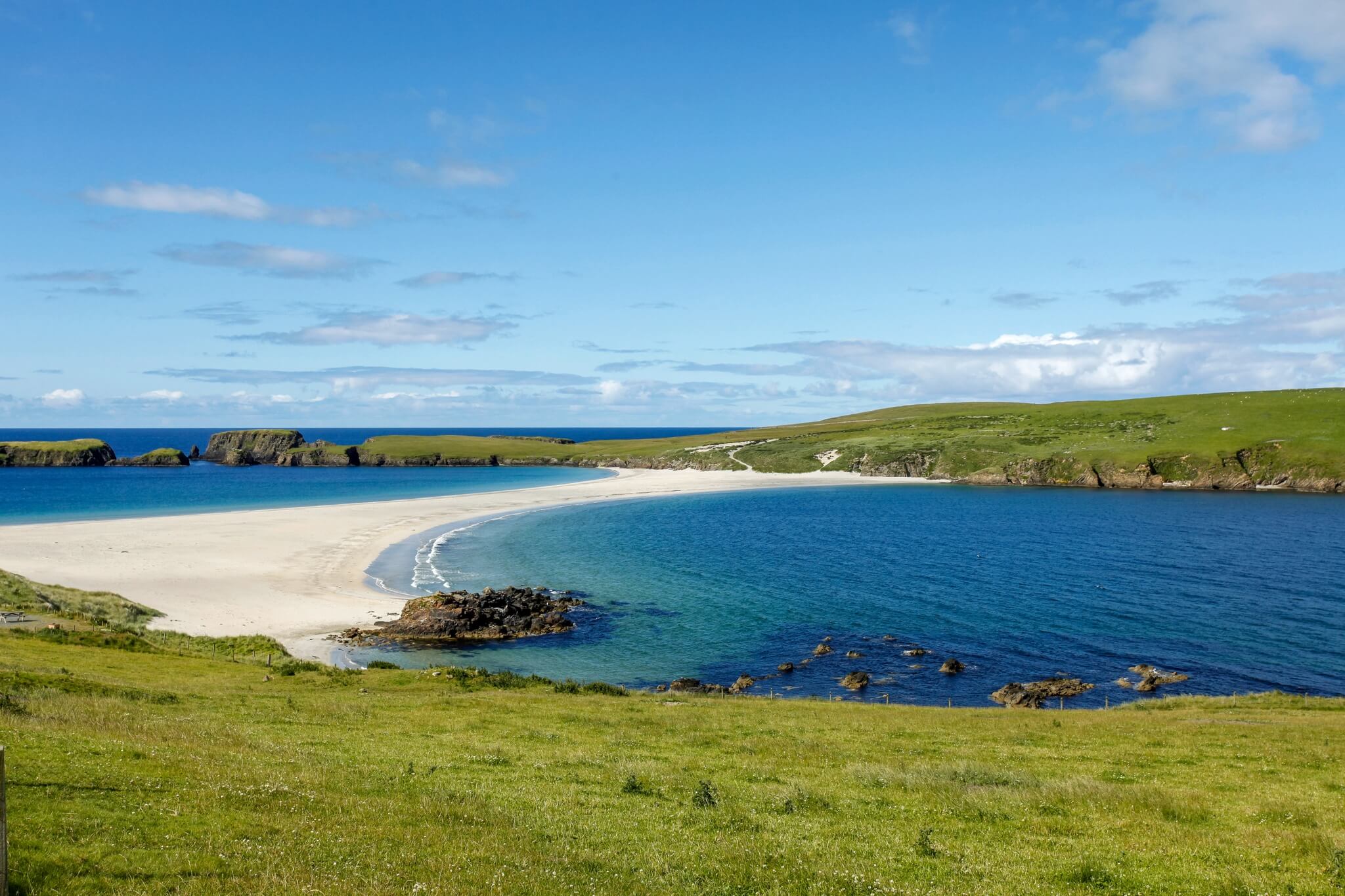
Islands of legend
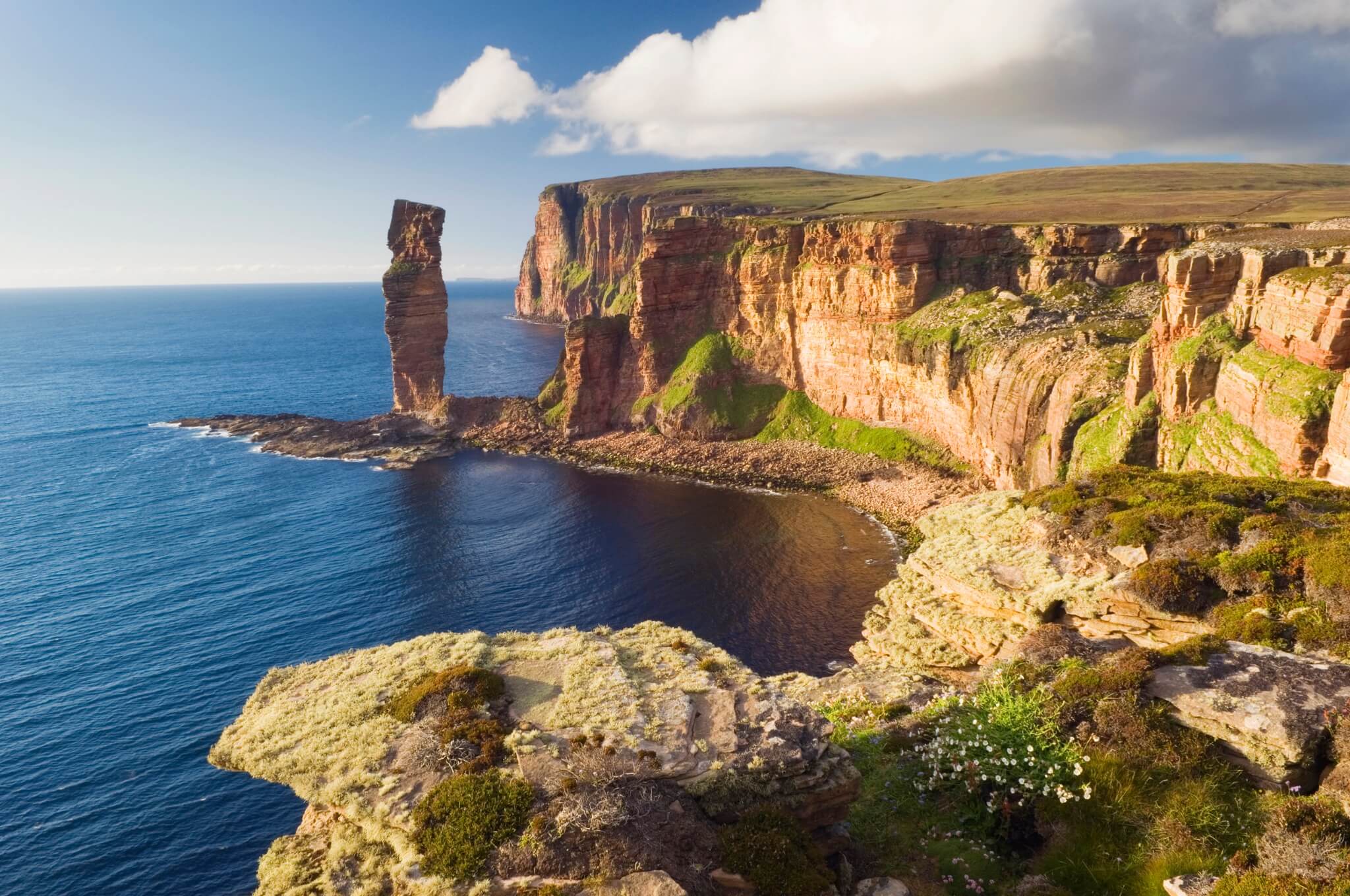
The scatter of islands that make up Orkney have been home to farmers and
fishermen for centuries; a continuity of life that stretches right back to
the earliest Neolithic times. The islands are so unspoilt that parts have
been designated a World Heritage site. Something that many Canadians would
wholeheartedly applaud, given that there are places in that country where
Orcadian surnames are as numerous as they are in Orkney itself.
Tracing your roots
In 2003, a new library building
was opened in Kirkwall, Orkney's main town. Here, for the first time under
one roof, visitors will find the archive, local studies library and Family
History Society working together. The local tourist board also has an
excellent website - ancestralorkney.com - for those researching their
Orkney roots.
- The county »
- Clan and Family Heartlands »
- Parishes »
- Local Studies Libraries »
- Local Archives Centres »
- Museum and Heritage Centres »
- Family History Society »
- Burials Information »
The county ~ Orkney
Orkney comprises 67 islands of which about 22 are inhabited. The first
colonists date back to about 3500 BC. Their stone houses on Papa Westray
are believed to be the earliest surviving dwellings on record in Britain.
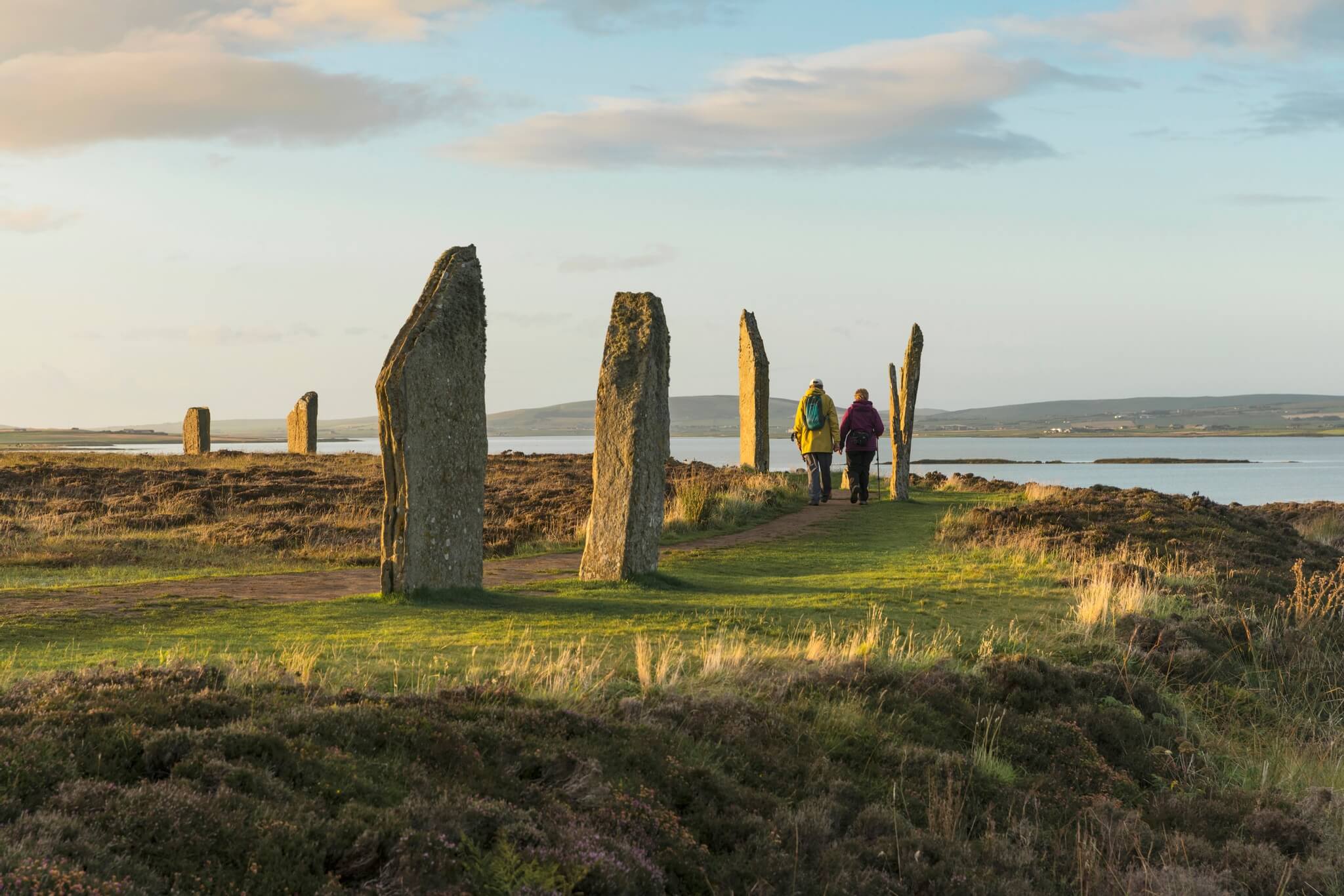
The famous "Standing Stones" of Stenness date back to about 3000 BC. The
Islands were conquered in 876 by Harald I of Norway. They were pledged to
Scotland in 1468 when James III married Margaret of Denmark.
Scapa Flow, lying between mainland Orkney and Hoy, became an important
anchorage for the British fleet in both World Wars. The German fleet was
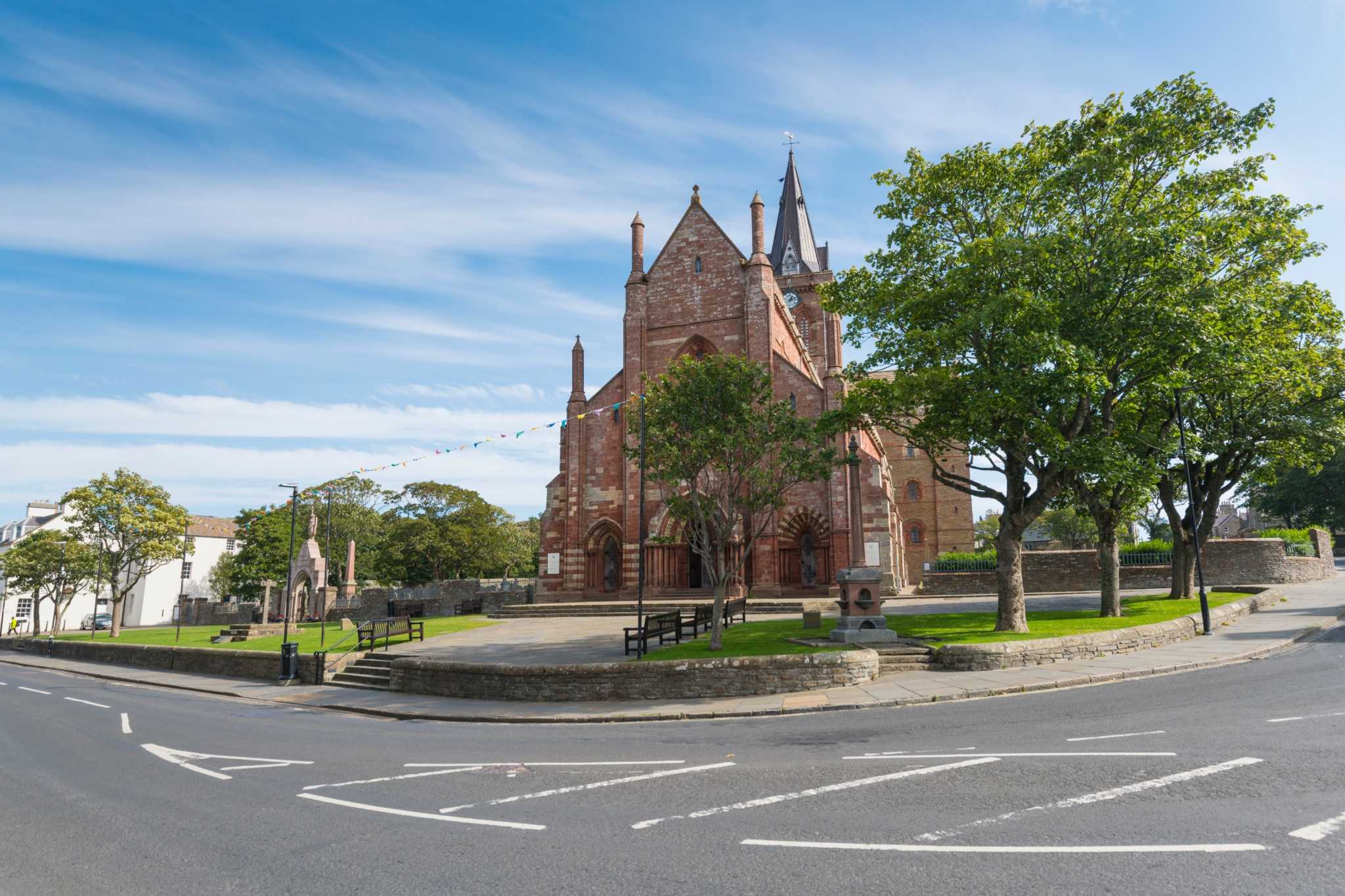
scuttled there in 1919. The town of Kirkwall is the capital and civic
centre of Orkney.
Clan and Family Heartlands
You can get a feel for the lives your ancestors lived by visiting the area they came from. These are areas where, for centuries, families lived together in a tightly-knit community. In the Highlands they are linked to clan heartlands, whereas, in the rest of Scotland the names are often those of the local landed families. Although it is unlikely that family historians can link their ancestry to clan chiefs or family dynasties, it can still be a moving experience to tour the clan and family heartlands.
Here is a selection of the most common names in this area.
Cursiter
Flett
Linklater
Loutit
Marwick
Spence
Sinclair
Tait
Spence
Scatter
Rendall
Parishes
The Parish Church can unlock many secrets for ancestral researchers. Not only was it the place where children were baptised, proclamations of marriage announced and the dead buried, it was also the centre of most social activity within the Parish. There is, however, no such thing as a definitive list of parishes. Over the decades they have merged, divided, been renamed and had changes made to their spelling. The following list is based largely on the situation at the time of publication of the New Statistical Account (1834-1845).
Birsay and Harray*,
Cross and Burness,
Evie and Rendall*,
Firth and Stenness*,
Holme and Paplay (Holm and Papley),
Eday,
Hoy and Graemsay,
Kirkwall,
Lady Orphir,
Ronaldshay and Burray* (North Ronaldsay),
Rousay and Eagleshay* (Rousay and Egilshay),
Sandwick,
Shapinshay,
St Andrews,
Stromness,
Stronsay and Eday (Stronsay),
Walls and Flotta,
Westray
* subsequently divided into seperate parishes, ( ) denotes alternative name or spelling
Detailed information on life and work within each of these parishes can be found in the Old (1791-99) and the New (1834-45) Statistical Account of Scotland. These are freely accessible on http://edina.ed.ac.uk/statacc. Part of their charm is the individual views of the minister, which can include some fascinating accounts of a parish's history, topography, employment, landowners, communications, agriculture and even the morality of the parishioners.
Local Studies Libraries
Almost every municipal authority in Scotland has a collection of local history publications, maps and archives. Although most of these libraries are prepared to undertake a limited amount of searching on your behalf, it is far more fulfilling to visit them yourself. You could lose yourself for hours, pouring over old newspapers and photographs.
The following is a list of the libraries in your chosen area:
The Orkney Library
44 Junction Road
Kirkwall
Orkney
KW15 1AG
Tel: +44 1856 873166
Fax: +44 1856 875260
E-mail:
Orkney.archives@orkney.gov.uk
www.orkneylibrary.org.uk
Open: Mon-Thu 09:00-20:00; Fri-Sat 09:00-17:00
Local Archives Centres
Almost every municipal authority in Scotland has a collection of local history publications, maps and archives. Although most of these libraries are prepared to undertake a limited amount of searching on your behalf, it is far more fulfilling to visit them yourself. You could lose yourself for hours, pouring over old newspapers and photographs.
The following is a list of the archive offices in your chosen area:
The Orkney Archive
c/o The Orkney Library
44 Junction Road
Kirkwall
Orkney
KW15 1AG
Tel: +44 1856 873166
Fax: +44 1856 875260
E-mail:
archives@orkneylibrary.org.uk
www.orkneylibrary.org.uk
Open: Tue-Fri 09:00-13:00 & 14:00-16:45; Thu 09:00-20:00, preferably by appointment.
Museum and Heritage Centres
Scotland is a country with a remarkable history. So it should come as no surprise that Scotland is home to a remarkable collection of museums and heritage centres. These range from the major, internationally renowned collections in Edinburgh's Royal Museum of Scotland to hundreds of small centres that specialise in the history of local communities. The following museums are all in your chosen area. A visit to any one of them may well shed new light on the lives led by your ancestors.
Orkney Museum
Tankerness House
Broad Street
Kirkwall
Orkney
KW15 1DH
Tel: +44 1856 873191
www.orkney.gov.uk/heritage
Open: May-September, Mon-Sat 1000-1700; Sun 1400-1700
Based in a town mansion, island life over the ages is displayed.
Stromness Museum
52 Albert Street
Stromness
Orkney
Tel: +44 1856 850025
www.orkney.gov.uk/heritage
Open: May-September, daily, 10:00 - 17:00.
October-March, Mon-Sat, 11:00 - 15:30.
Displays the island's maritime history including the Hudson Bay Company.
Orkney Wireless Museum
Kiln Corner
Junction Road
Kirkwall
Orkney
KW15 1LB
Tel: +44 1856 871400
www.owm.org.uk
Open: April-September, Mon-Sat, 10:00 - 16:30 & Sun 14:30 -
16:30.
October-December, Sun 14:00 - 16:30.
A collection tracing the history of early domestic radio and wartime communication in Orkney. It features maps, charts, equipment and wartime memorabilia.
Scapa Flow Visitor Centre and Museum
Lyness
Hoy
Orkney
Tel: +44 1856 791300
Open: Mon-Fri 09:00-16.30, mid-May - October, also Sat-Sun 10:30-15:30
Westray Heritage Centre
Pierowall
Westray
Orkney
KW17 2BZ
Tel: +44 1856 677 414
Open: May-June & September, 14:00 - 17:00, July-August, 10:00 - 12:00 & 14:00 - 17:00.
Collection of 400 photographs depicting life on the island, information on burial grounds, churches and local families.
Family History Society
Local societies are run by volunteers who meet together periodically. Most maintain an index of members' interests - and this could well lead to the discovery of a long lost cousin or two. If there are any such societies in your chosen area, they will be listed below.
Orkney Family History Society
Orkney Library and Archive
44 Junction Road
Kirkwall
Orkney
KW15 1HG
E-mail:
olaf.mooney@virgin.net
Web: www.orkneyfhs.co.uk
Activities include the collection of family trees of Orcadian families.
It may seem a little odd, but a visit to the burial ground of an ancestor can make you feel more closely connected to them. However, tracking down the specific plot, or lair as they were referred to in Scotland, depends on the period of time when the deaths occurred.
Up to the mid-19th century it was the normal practice for people to be interred in the Parish Kirk burial ground - although this was only rarely marked with anything as grand as a headstone. The Scottish Association of Family History Societies (SAFHS) is currently co-ordinating a major project to develop a National Burial Index, relating to pre-1855 records. This will eventually be available on CD ROM. Although this will help to confirm that burials took place in parish burial grounds, it will not, unfortunately, indicate the location of the lair.
If your ancestor was wealthy enough, their grave may have been marked by an inscribed headstone. Over the years, family history societies and other volunteer groups have painstakingly transcribed and indexed such inscriptions - and these are nearly always held in the relevant local history libraries or family history research centres.
By the mid-19th Century, many parish burial grounds had become seriously overcrowded, especially those in urban areas, and this led to the creation of both private and municipal cemeteries. If you know the place and date of death, you should be able to discover the location of a lair, although not all cemeteries and records have survived.
The concept of cremation started to gain popularity in the late 1940s and has increased ever since. Ashes may be taken away by the family, scattered in the garden of remembrance or buried either in the crematorium or in a family plot.
Senior Administration Officer
Chief Executive's Dept
Orkney Islands Council
School Place
Kirkwall
KW15 1NY
Tel: +44 1856 873535 Ext: 2205
Fax: +44 1856 874615
Enquiries may be by personal visit, telephone or letter provided reasonably specific details are known of the death/burial. Personal visits by appointment. No fee is currently charged for this service.
Print this page - all information will be printed
Page top