Content on this page requires a newer version of Adobe Flash Player.

Get Adobe Flash player

Scottish Clan Tours

Researching your family tree is a voyage of discovery. Full of intrigue, exotic names and fascinating histories. It is a pastime that rewards again and again. But those who simply trace their family tree from the comfort of their own home are missing out on the real story of their heritage.

For the whole exciting picture, you need to visit the places you read about. And that means a trip to Scotland. To help you plan your trip, we've compiled a number of clan-themed touring itineraries . So if you see your clan name, just follow the trail and walk in your ancestors' footsteps.

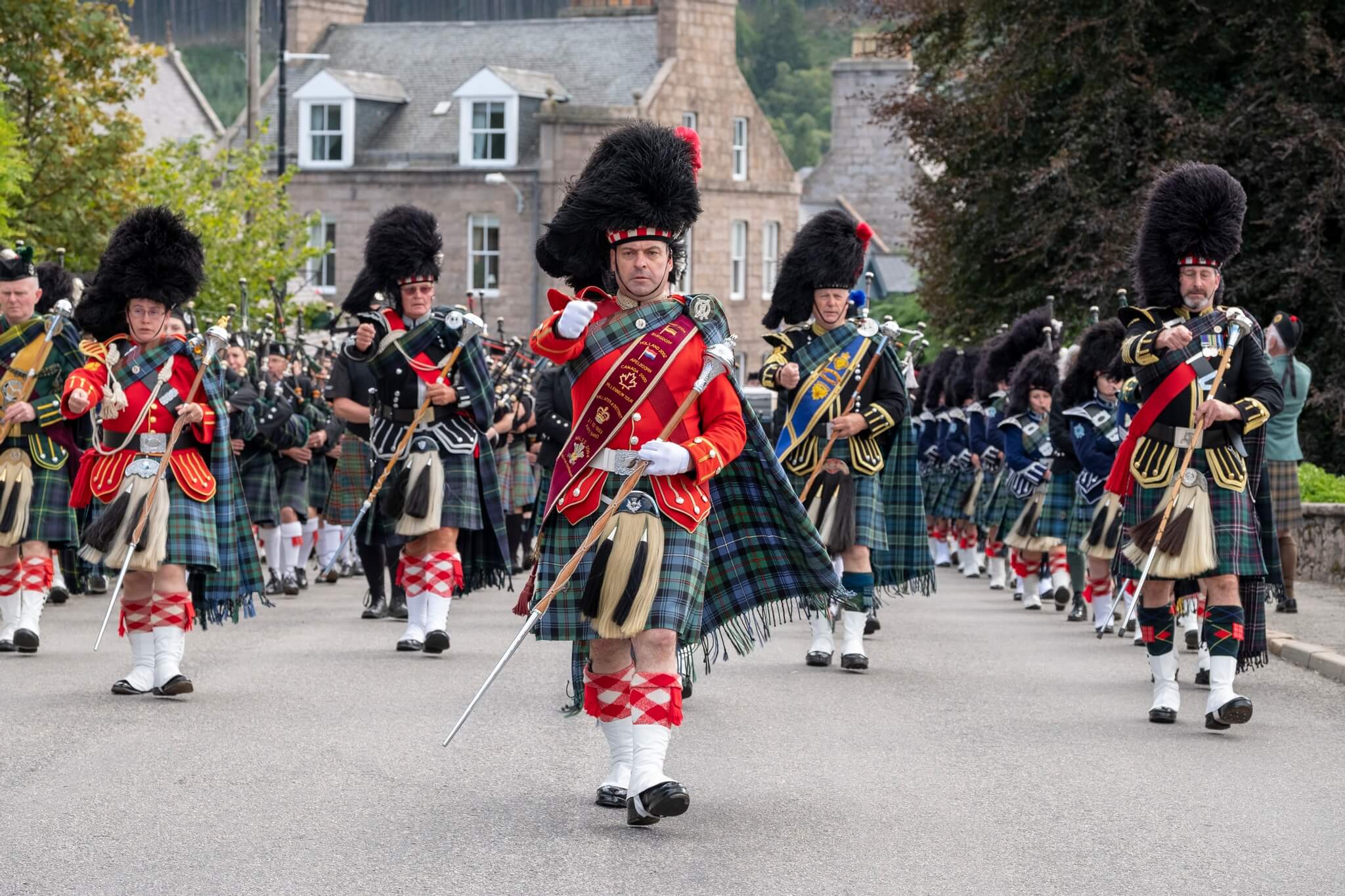
From evenings of toe-tapping traditional music in friendly pubs to the colour and excitement of Highland Games, every gathering of Scots is a celebration that you'll want to be part of.
Clan Farquharson touring information

Farquhar was the fourth son of Alexander Shaw of Rothiemurchus. He owned land near the source of the River Dee in Aberdeenshire. His grandson Finla Mor is said to be the progenitor of the Clan. He had nine sons who each founded a different branch of the clan in Aberdeenshire. Finla Mor was also the royal standard bearer at the Battle of Pinkie (1547), where he was killed. Clan Farquharson joined the powerful Highland confederation of Clan Chattan in 1595 and were called the "fighting Farquharsons" having a reputation for being involved in many conflicts and battles. The confederation had a turbulent history, being often perceived with trepidation by both the Lords of the Isles and the Scottish Kings.

This itinerary takes you from the royal capital, Edinburgh through the Highlands of Scotland to visit the lands of your ancestors. The Upper Deeside country is surrounded by a rampart of mountains with few and narrow passes into the area making it a formidable fortress. Here we will highlight just a few of the stories and places where the Farquharsons and their followers have left their mark. You can experience the peace and tranquillity of inspiring Scottish landscapes, the evocative splendour of ancient castles, the hospitality of the local people and much more.

Day 1

Arrive in Edinburgh, Scotland's magnificent historic capital. You'll be spoilt for things to do and places to visit. A good starting point is the National Museum of Scotland in Chambers Street. Here, you'll find the history of Scotland from early geological times through to the present day. At the nearby Scottish Genealogical Society library in Victoria Terrace you'll find plenty of fellow travellers and enthusiastic researchers, as well as a wealth of genealogical information and guidance. No appointment is necessary but there is a small charge for non-members. To the east of Edinburgh is Musselburgh, built on the banks of the River Esk. The Battle of Pinkie was fought nearby in 1547. The Duke of Somerset led a small force of troops and cavalry with naval support on the Firth of Forth. A larger but less disciplined force of Scots was led by the Earl of Arran who had little military ability. He misinterpreted English manoeuvres as preparing to retreat so crossed the river and attacked. The English artillery proved decisive and it is said that nearly half the Scottish army was either killed or taken prisoner, the English only losing a few hundred men. The battle was disastrous both because of the lives lost and the further distancing of Queen Mary from Prince Edward, driving Mary towards the French Dauphin.

Day 2

Today make your way towards Stirling. A few miles to the west of Edinburgh you will pass Falkirk. When Prince Charlie returned to Scotland in 1745, the chief of the Mackintoshes was an officer to George II and in command of a company of the Black Watch. Although he did not rally to the Prince's call to arms, his wife, Anne Farquharson of Invercauld, raised the confederation in his absence. She selected MacGillivray of Dunmaglas as the commander and Clan Chattan fought and won under him in the Jacobite victory of Falkirk in 1746. For this deed Anne was known as Colonel Anne. She later saved the Prince from capture when resident at Moy (near Inverness) and was even imprisoned in Inverness for several weeks after the Battle of Culloden. Continue to Stirling, a historic city with much to offer its visitors. It is an attractive mix of old and new. For a very different experience visit the Old Town Jail but make sure you plan your escape! The impressive Stirling Castle towers above the river and medieval bridge. Whilst in Stirling take the opportunity to visit the very poignant site of the Battle of Bannockburn (1314). Robert the Bruce declared himself King of Scotland in 1306 and began a long and arduous campaign to secure his title, finally achieving success at this battle.

Day 3

Now we will head for the Highlands. Travel north on the A9. You will pass by Perth, Dunkeld, Pitlochry, Killiecrankie (the site of the first battle in the Jacobite uprising) and Blair Atholl. Enjoy the beautiful scenery and natural and historic sites where you can break your journey. At Newtonmore and in Kingussie you'll find two fascinating Folk Museums where more than 400 years of Highland history are brought to life in exhibitions which track the everyday experiences of clansman and crofter.

Day 4

South-east of Aviemore is the Rothiemurchus Estate. The lands extend round Loch an Eilean, where a ruined castle stands on an island. This is where the ancestors of the Farquharson clan originated. Now travel to Inverness. You may want to relax and enjoy the Highland hospitality of Inverness after a busy few days, and there is plenty to see. A fine introduction to the area can be found at Inverness Museum.

Day 5

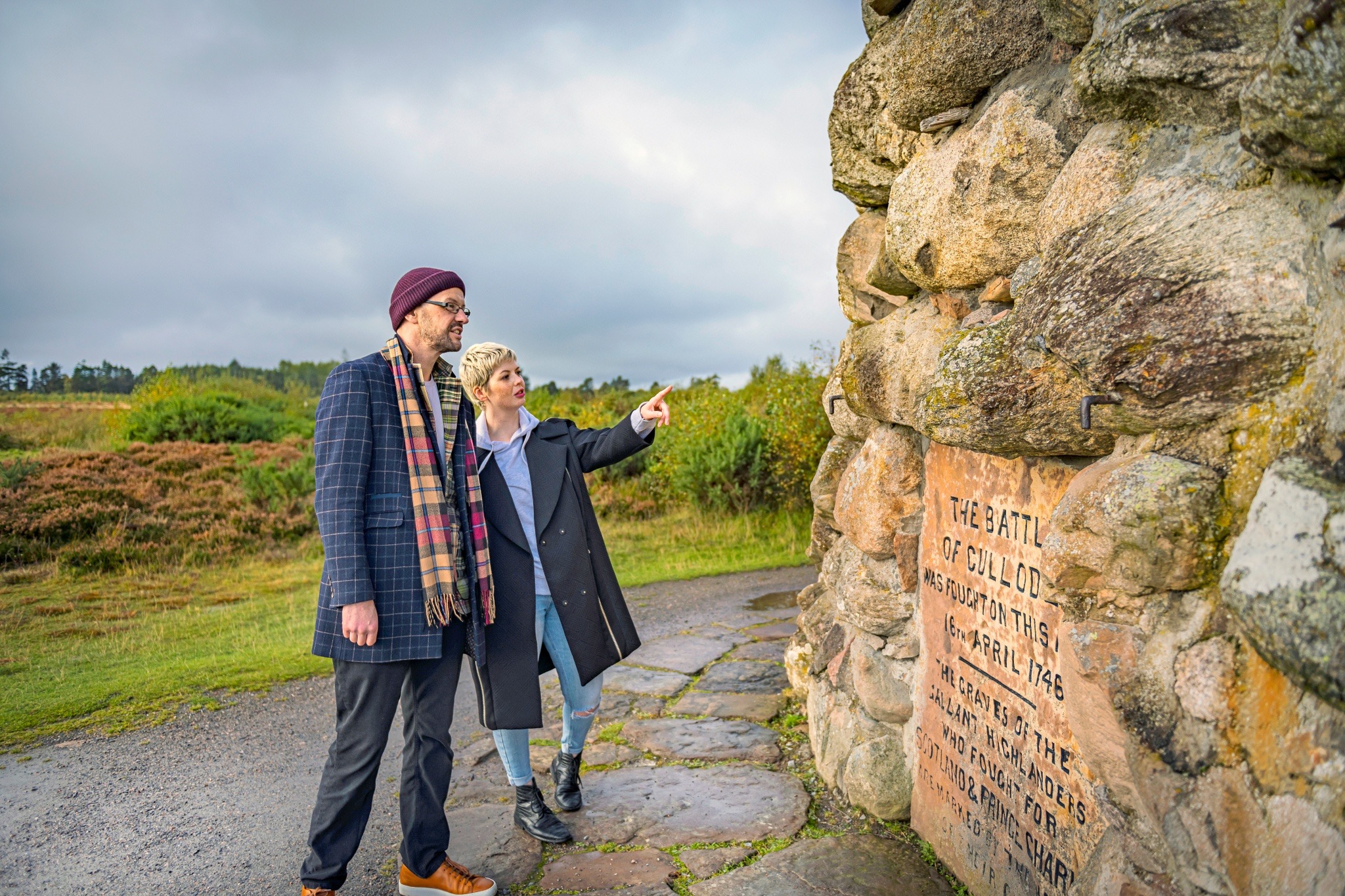
Then, for a truly atmospheric experience, make the short journey to the battleground of Culloden where, in April 1746, 'Bonnie' Prince Charlie's Jacobite rebellion was crushed by Government forces. Clan Chattan and the Farquharsons suffered heavy losses at the battle in support of the "young pretender". Now retrace the journey south down the A9 but turn east at Carrbridge and take the road encircling the Cairngorms National Park towards Ballater. Farquhar's son Donald married Isobel Stewart of Invercauld. Their son Finla Mor inherited the Invercauld Estate, now a large area curving round from Ballater west to Braemar and south to the Spittal of Glenshee. His nine sons founded branches of the Farquharson clan around this area. These include Farquharsons of Achriachan, Whitehouse, Monaltrie, Finzean Tullochcoy, Inverey, Allanaquoich and Broughdearg. On the way to Ballater you pass through Tomintoul, the highest village in the highlands. In this area lived the Achriachan branch. The Tomintoul Museum and Visitor Centre features a crofter's kitchen, village blacksmith's shop and the sounds and smells of rural working life. Travel to Ballater, a new town built by Francis Farquharson of Monaltrie in the 1790s. In Ballater you can find Monaltrie House built in 1782 and which is now a hotel. A few miles to the east is Finzean in the Feugh Valley, nestled in woodlands and heathery hills. This was the home of the Finzean Farquharsons, including Joseph Farquharson, a famous Victorian landscape artist. To the west of Ballater was Tullochcoy, near Crathie. Nearby is Balmoral Castle, the beautiful summer retreat of the Royal Family. Prince Albert purchased the Balmoral Estate for Queen Victoria in 1852. When the new castle was completed in 1856 the original 15th century castle, probably built by your Farquharson ancestors, was demolished.

Day 6

A mile or so further west is Inver. Here Glen Fearder stretches to the north-west. The "fighting Farquharsons" gathered at the foot of the Glen when their chief or the Clan Chattan chief needed men to help with a raid or a battle. The Farquharson clansmen would meet together, each bringing with them a stone from the river. These were piled up nearby and collected again only after the raid or battle. In this way they knew how many of them had been lost, and the remaining stones were piled up on a cairn of remembrance, the Cairn-a-Quheen. Continue west to Braemar, the centre of the Invercauld Estate and the seat of the Farquharson Clan. At the end of the 16th century the Erskines reasserted their claim to the ancient Earldom of Mar and were opposed by the many Farquharsons in the Braemar area, who had both prominence and power. John Erskine built a castle at Braemar to defend his lands but his defence failed and the castle passed into the hands of the Farquharsons. Braemar is an attractive village which enjoyed the royal patronage of Queen Victoria and hosts the world famous Braemar Highland Gathering. It also boasts the record for the lowest recorded temperature in Britain of -27.2 degrees on 10th January 1982. Half a mile to the east is the Braemar Castle, a fairytale castle inside star-shaped walls. The Castle has many period furnished rooms and museum exhibitions and you can discover how the Farquharsons have managed and improved the estate over the last 300 years.

Day 7

To the west of Braemar on a side road you will find Inverey and Allanaquoich, two more of the places the nine sons of Finla Mor settled. John Farquharson of Inverey features in the ballad "The Baron o'Brackley". Brackley had impounded some of Inverey's cattle and in revenge Inverey with his followers took back his own and Brackley's cattle. According to the ballad, Brackley was taunted by his wife to stop the Farquharsons even though he was in the house only with his brother and when Brackley and his brother were slain she engaged in a shameless liaison with Inverey! Inverey was then an outlaw for a while and went into hiding. He had to go into hiding again: he joined the Jacobite rebellion at the Battle of Killiecrankie (1689) but following the defeat of the government forces his castle was burned and he escaped to the "colonel's cave" in the glen above the village of Inverey. Travel south from Braemar, through the Glenshee ski resort area along the highest main road in the UK through the Munro Mountains. The Invercauld Estate stretches south to the Spittal of Glenshee. Two miles south-east of here is the site of Broughdearg Standing Stones, the lands of the Farquharsons of Broughdearg, although the standing stones would have been there for many generations before your ancestors! Now make your way back to Edinburgh.

Day 8

Before leaving Scotland, and Edinburgh behind, you might like to relax and enjoy one of the excellent bus tours of the city, visit the Palace of Holyroodhouse at the end of Edinburgh's historic Royal Mile or explore Edinburgh Castle, from the battlements of which you can enjoy commanding views out over both the New and Old towns of Edinburgh.

------------------------------------------------------------------------------
To search over 8,000 quality assured accommodation, from bed and breakfast to castles log on to www.visitscotland.com.

The information contained in this itinerary is as supplied to VisitScotland and to the best of VisitScotland's knowledge was correct at the time of publication. VisitScotland can accept no responsibility for any errors or omissions.

VisitScotland is committed to ensuring that our natural environment and built heritage, upon which tourism is so dependent, is safeguarded for future generations to enjoy.

Print this page - all information will be printed

Page top