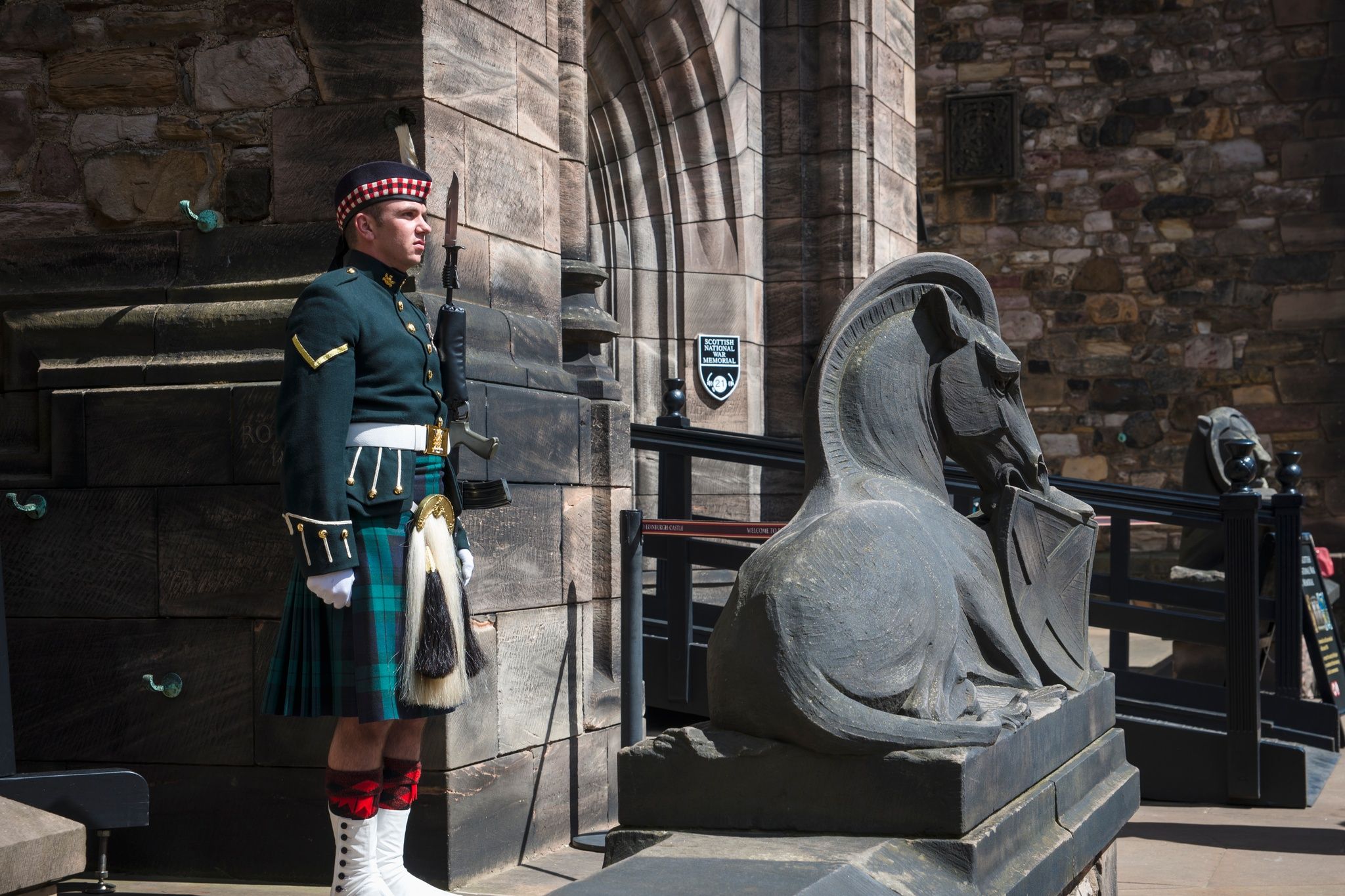
A member of the Royal Scots Guard
SOLDIER
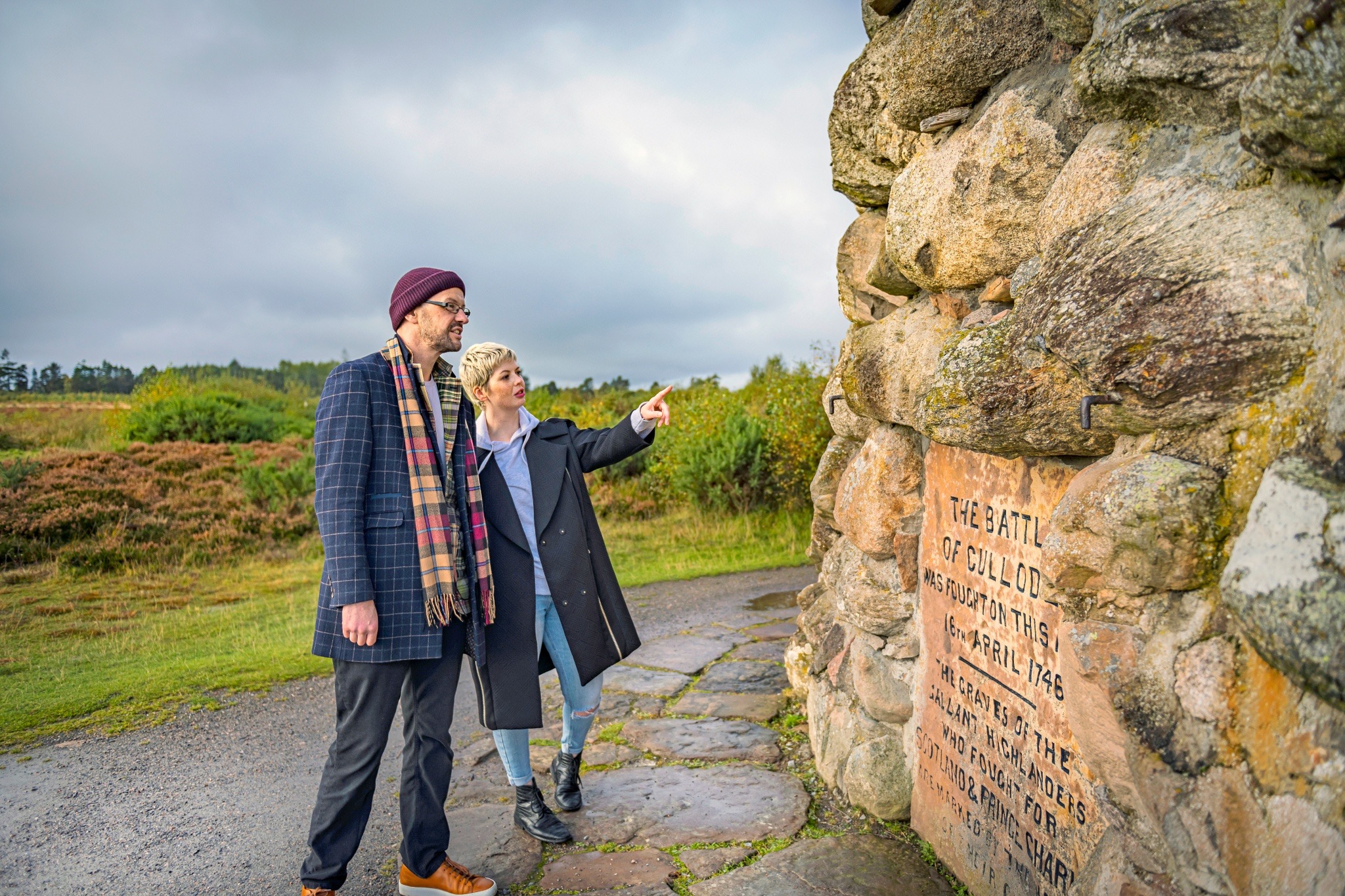
- Before the defeat of Prince Charles Edward Stuart at the Battle of Culloden in 1746, Scotland's clan system employed private armies.
- After this, Highlanders and Lowlanders fought under the British flag.
- Scotland had 12 Highland regiments who fought in Europe, North America and India.
- After defeat in the American War of Independence, disbanded troops were encouraged to settle in Canada and many Scots did.
- Around 6,000 Scots fought in the Battle of Waterloo in 1815, and many others fought in the Crimean and Boer Wars, as well as World War I and II.
- Over the last 50 years, many regiments have been disbanded or merged, eventually forming a single Royal Regiment of Scotland in 2006.
Visit the National War Museum and the Royal Scots Regimental Museum at Edinburgh Castle, Fort George near Inverness, the Gordon Highlanders Museum in Aberdeen, the Black Watch Castle & Museum in Perth and the Argyll & Sutherland Highlanders Museum at Stirling Castle to find out more.
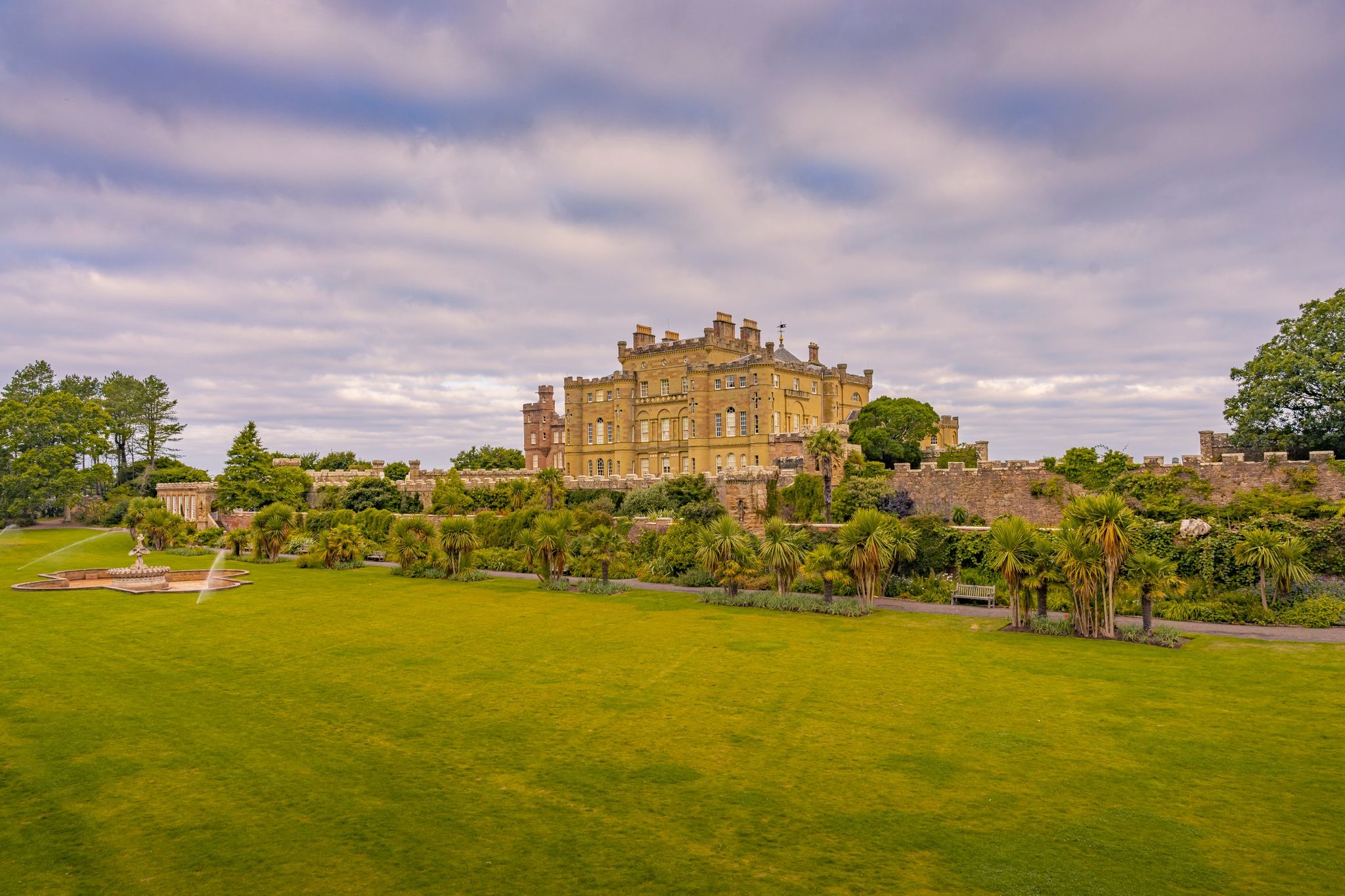
Culzean Castle
DOMESTIC SERVANT
- During the 19th century, domestic service was the biggest single employer for women and the second largest employer of all workers.
- Butlers and grooms tended to be male workers, but cleaners, maids and cooks tended to be women.
- Most domestic servants lived in their employer's house - although they weren't paid much they did at least have a guaranteed roof over their heads.
- Most servants did all kinds of work and worked long hours with only the odd Sunday off.
Find out more on any visit to a stately home or castle by checking out the 'downstairs' where domestic servants worked. You can also visit the Georgian House in Edinburgh and Pollok House in Glasgow.
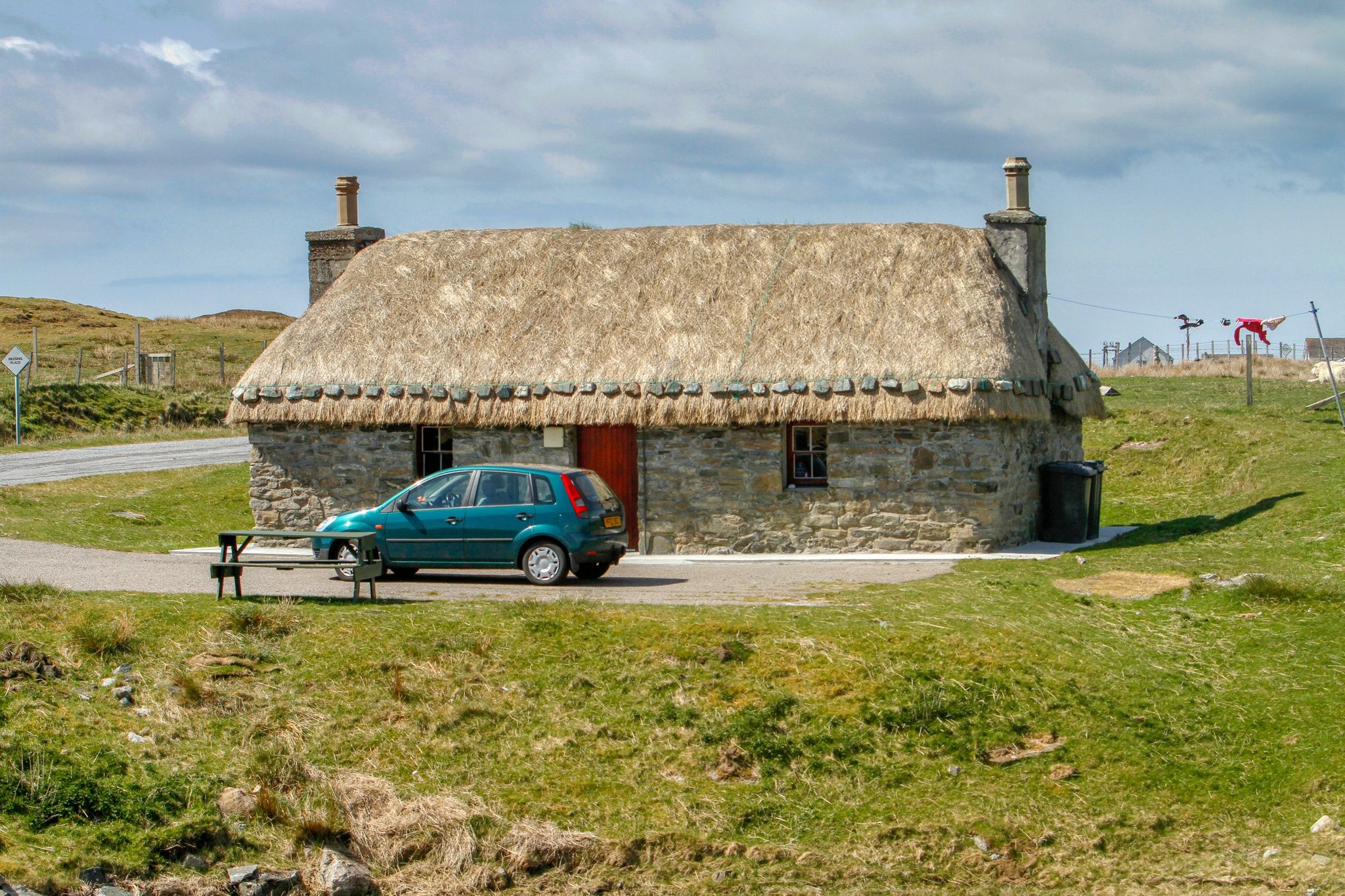
A traditional crofting cottage
CROFTER
- Crofts were found in the Highlands and islands, and were normally worked by the tenant of the croft who paid rent to the landlord.
- Crofting was often hard work, and was only part of the crofter's working life - often they had another job in their communities.
- Crofting became much more concentrated after the Highland Clearances of the 18th and 19th centuries.
- There are currently believed to be around 20,000 working crofts in Scotland. Even today, many crofters also have a second job that provides the majority of their income, or they are retired.
There are many museums throughout the Highlands and islands where you can find out more including the Gairloch Heritage Museum in Auchtercairn, the Skye Museum of Island Life in Kilmuir, Seallam! on Harris, Kirbuster Farm Museum in Orkney and Old Haa Museum in Shetland.
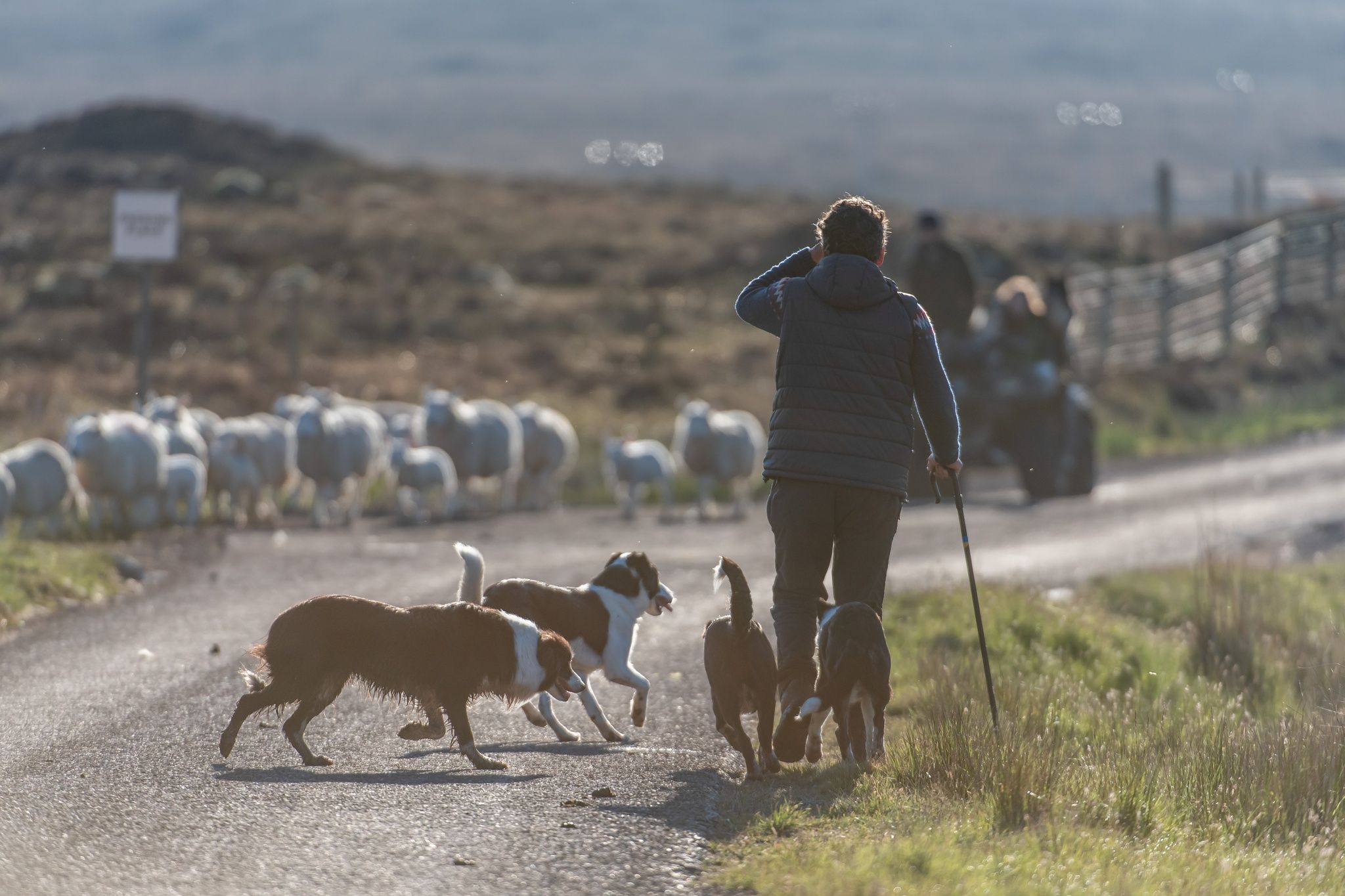
A farmer and his sheep dogs
FARMER
- Before the agricultural revolution, most families kept their own animals and grew enough food to feed themselves.
- At the end of the 18th century, common grazing was replaced by self-contained farms.
- Scotland can lay claim to several important developments in farming - including drainage and plough improvements.
- This increased efficiency led to there being less jobs available, forcing people to move to the industrial towns and even overseas in search of work.
- Those who stayed on farms lived in 'bothies' if they were single, or basic farm cottages if they were married.
Visit the National Museum of Rural Life in East Kilbride or the Highland Folk Museum in Newtonmore to find out more.
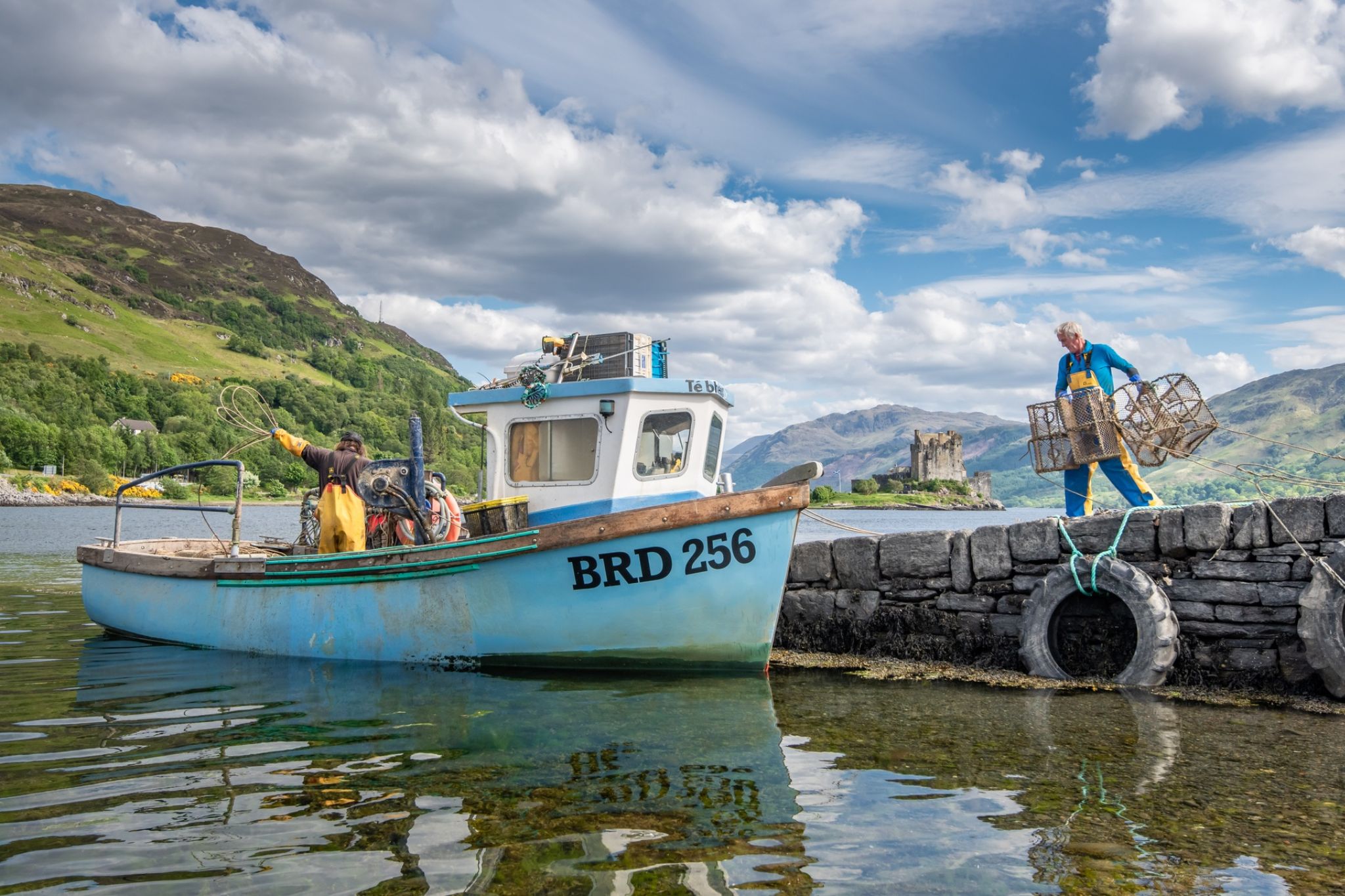
Creel Fishing Wester Ross
FISHERFOLK
- Fishing has been a big industry in Scotland for hundreds of years. Even today, you can head down to the shores and watch the fish being brought in and sent straight off to our award-winning restaurants.
- The North Sea has a great variety of fish to offer supporting everything from crab fishing to herring and deep-sea fishing.
- As well as fishing out on the boats, the industry created lots of jobs back on land with the family of fisherfolk working to gut, preserve, bait lines and repair nets.
- Fishing tended to be seasonal with people relocating to the ports during the fishing season.
Visit the Scottish Fisheries Museum in Anstruther to find out more.
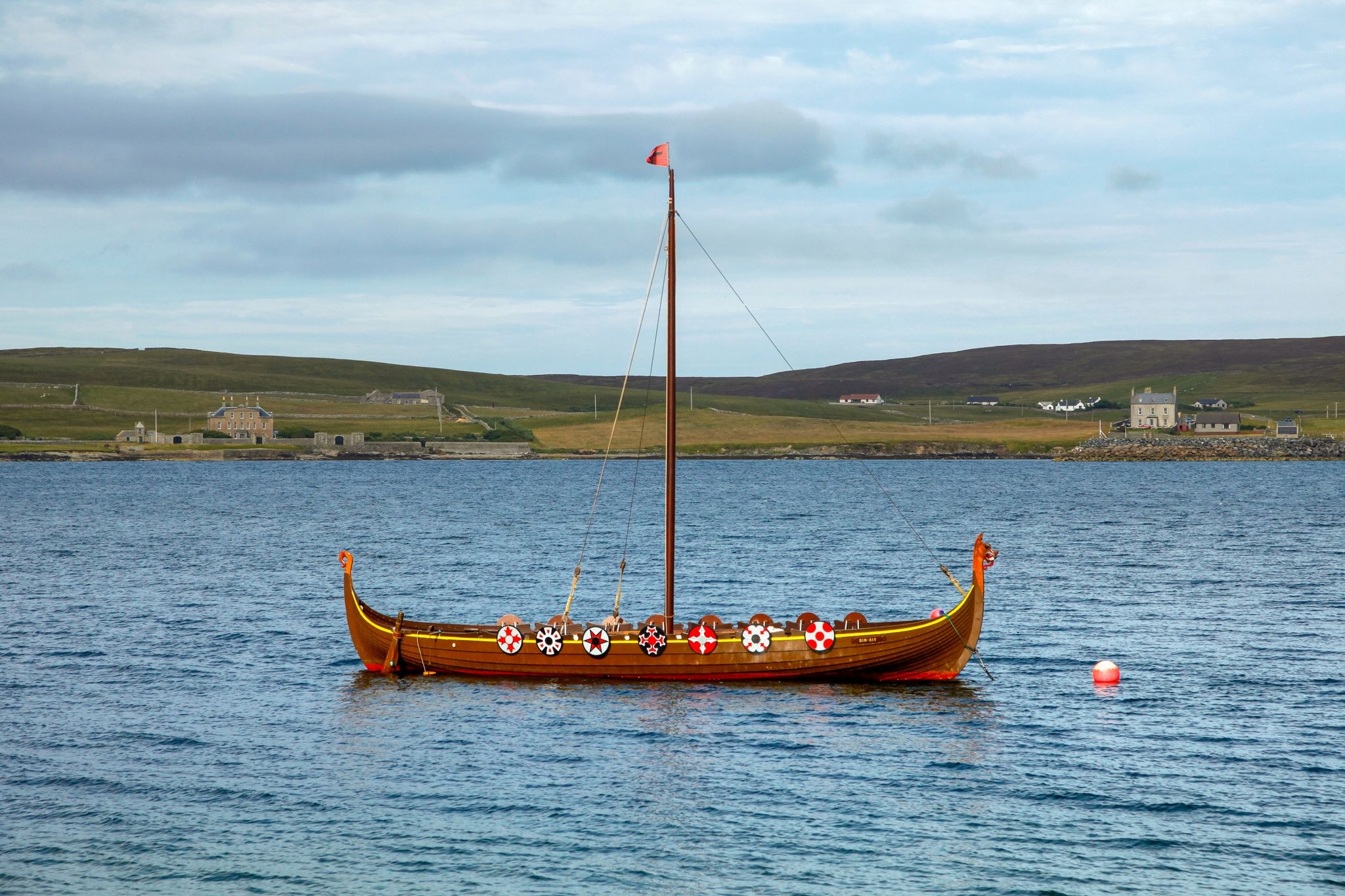
Viking ship replica
SHIP BUILDER
- Originally shipbuilders were known as shipwrights and their skills were in woodworking.
- Scotland's main contribution to the Industrial Revolution was to build steel-hulled ships.
- By 1913, around 18 percent of the world's ships were built on the River Clyde, and the term 'Clyde-built' stood for quality and reliability.
- Many famous ships were built on the Clyde including the Cunard Queen liners, warships and the Royal Yacht Britannia.
- Workers were low paid and often didn't have permanent jobs, only working when a contract was secured for a particular ship.
- During World War I, the shipyards were taken over by the Admiralty. Economic depression followed the war, meaning two thirds of the workforce were unemployed.
Visit the Riverside Museum in Glasgow, the Scottish Maritime Museum in Irvine and the Aberdeen Maritime Museum to find out more.
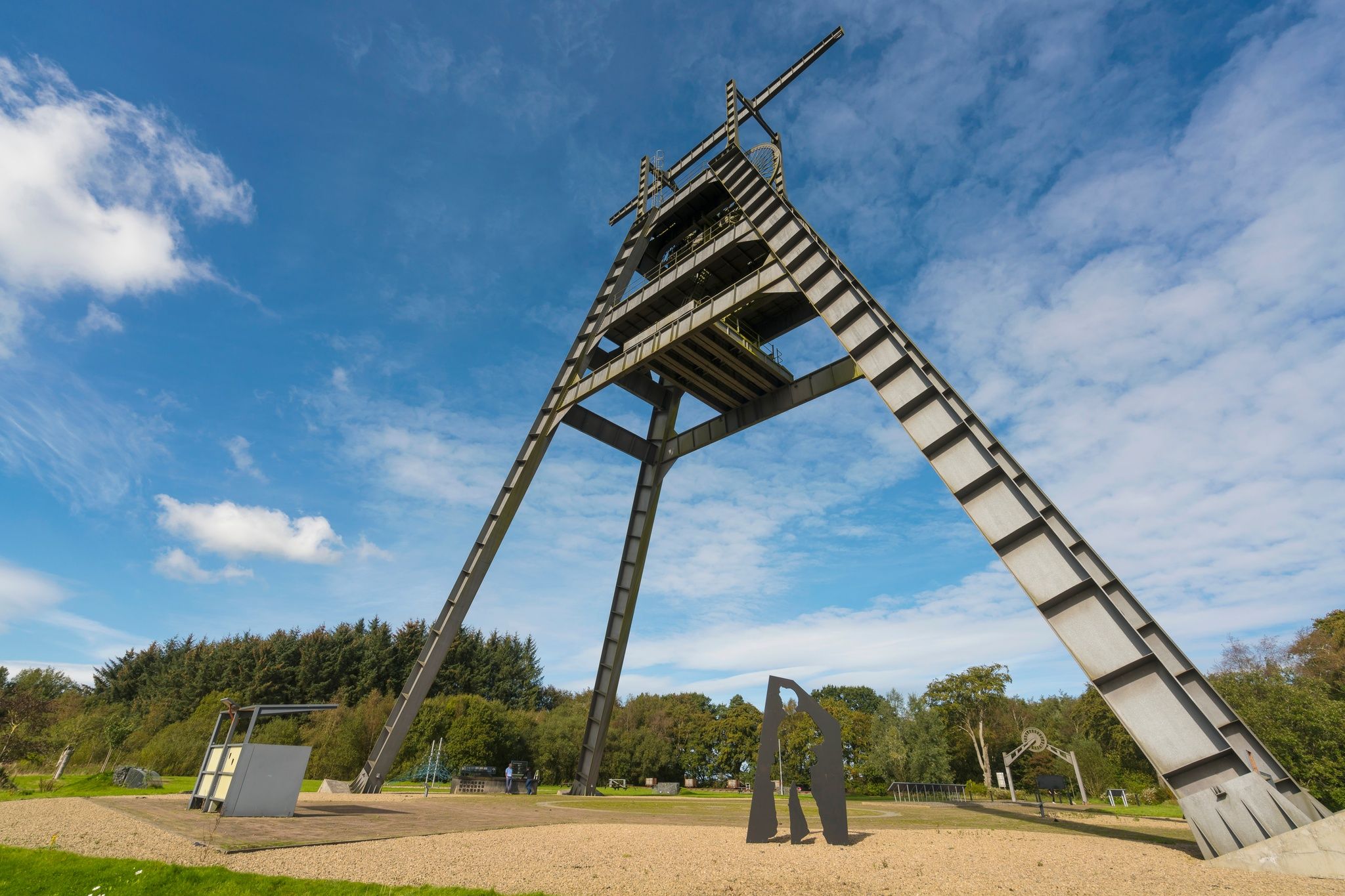
The Barony A Frame is a preserved head frame and part of a mine shaft.
COAL MINER
- For over 100 years, coalmining played a major part both in providing work and in dominating the landscape of certain areas.
- Coalmining initially was run by individual landowners, but during the 1800s it changed hands to private companies.
- It was hard work and dangerous both for the miner, but also for his family - often his wife had to transport the coal that her husband had mined to the surface.
Visit the National Mining Museum Scotland in Newtongrange to find out more.
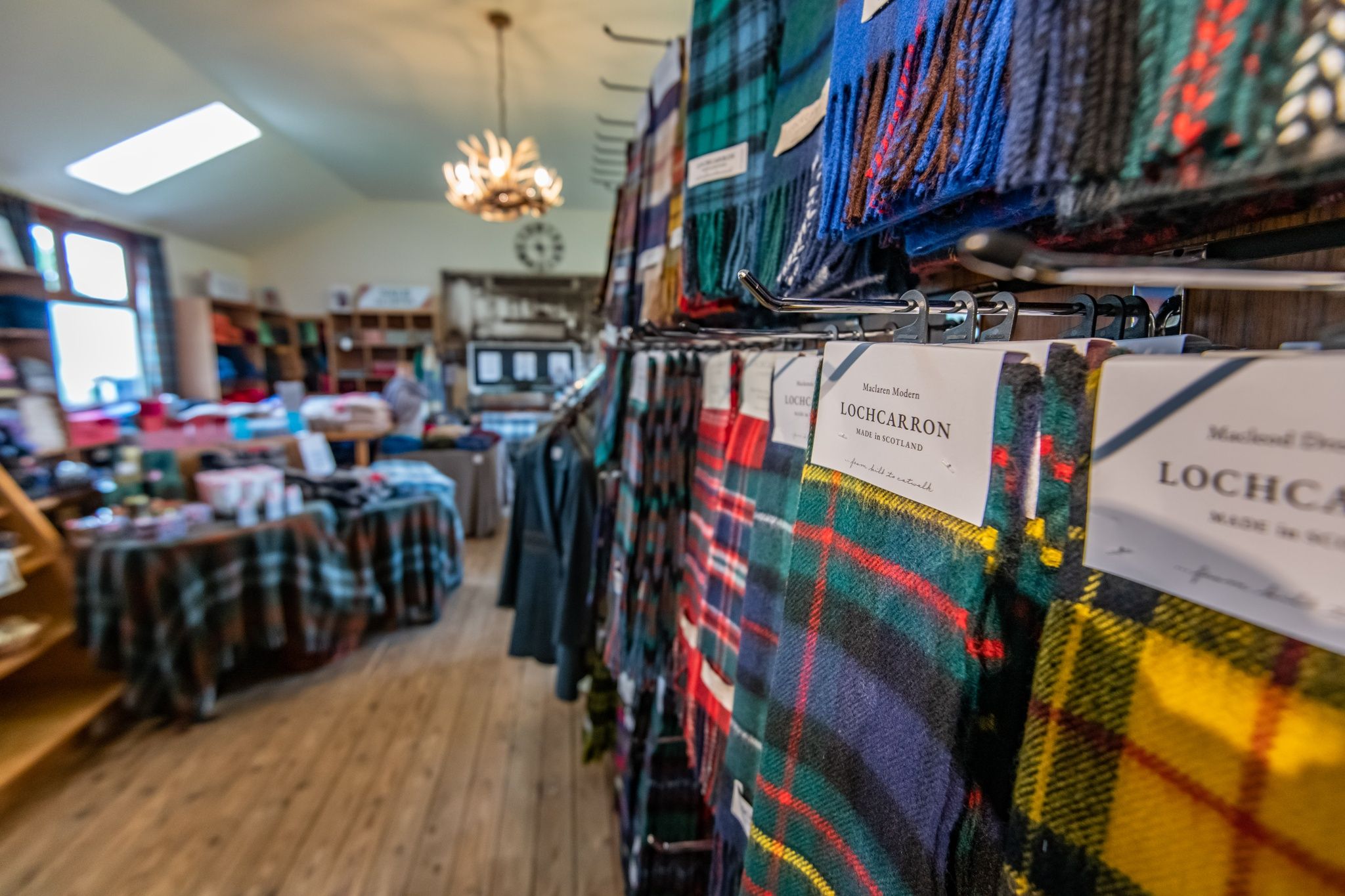
Lochcarron Weavers
WEAVERS
- Weavers used the threads created by spinners to make a variety of fabrics and materials.
- Originally weavers worked from home - women and children worked in their own cottages - until the Industrial Revolution when big weaving sheds were set up with power looms.
- Weavers produced: quality tweeds in the Borders, cottons in the west, damask in Dunfermline, patterned shawls in Paisley and jute in Dundee.
- After a famous visit of George IV to Edinburgh in 1822, tartan was produced commercially as it enjoyed a big jump in demand.
- Spinners and weavers often fell out, as weavers thought they were more superior.
Visit the Weavers Cottage in Kilbarchan, Verdant Works in Dundee, New Lanark World Heritage Site and Borders Textile Towerhouse in Hawick to find out more.
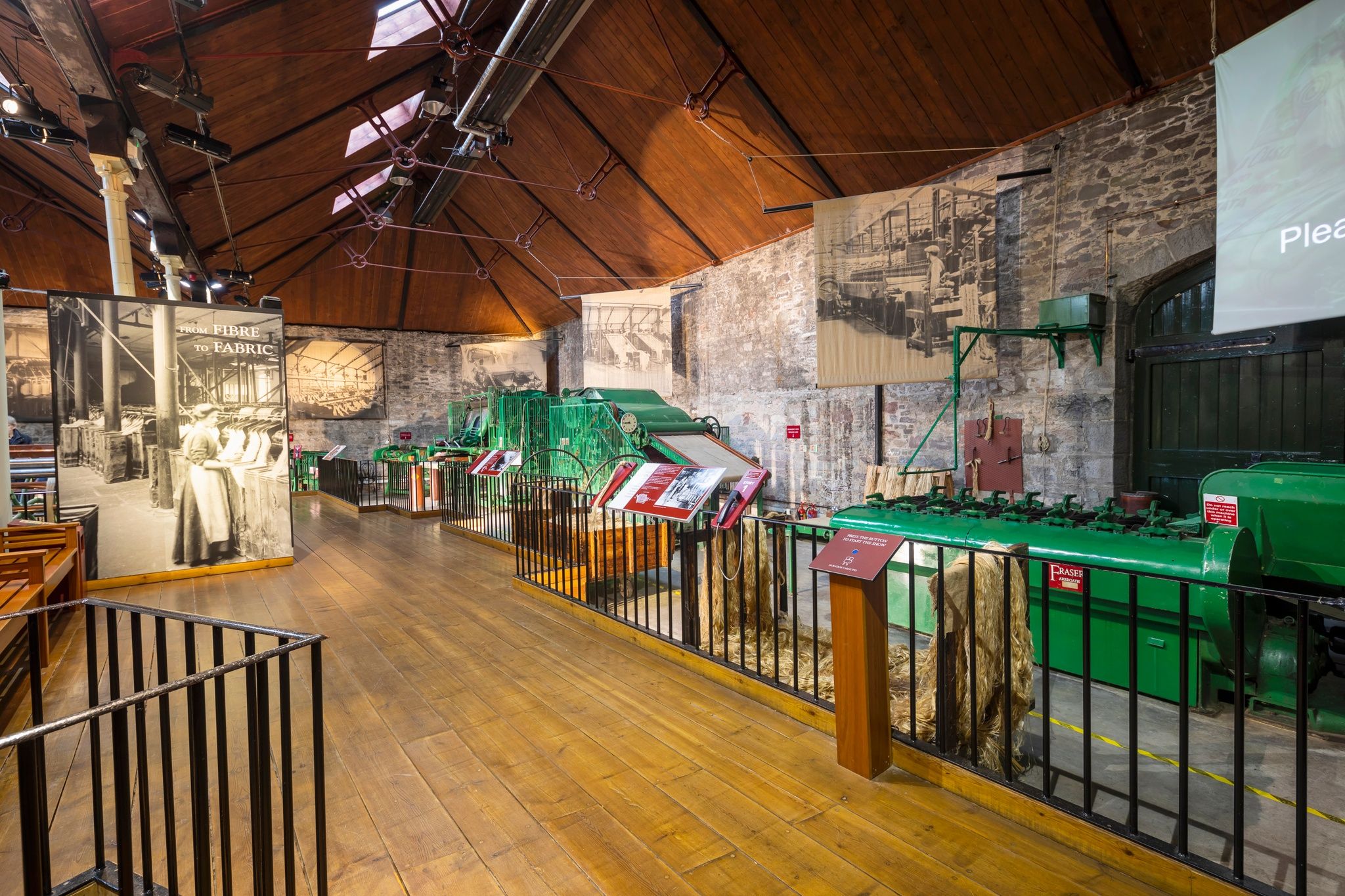
Verdant Works
SPINNERS
- Spinning is when fibres are drawn out and twisted together to make a continuous thread for weaving.
- Spinning was originally the work of unmarried daughters living in poor households. It's what the term 'spinsters' is based on.
- Originally they worked at home, but eventually big spinning mills were set up throughout the lowlands and staffed by women and young children.
- Wages were low and they had to work around 60 hours a week.
- Steam power eventually replaced water power, so mills could be built in bigger areas such as Paisley and Dundee where there was a bigger workforce.
Visit New Lanark World Heritage Site - a revolutionary cotton mill - and Verdant Works in Dundee.